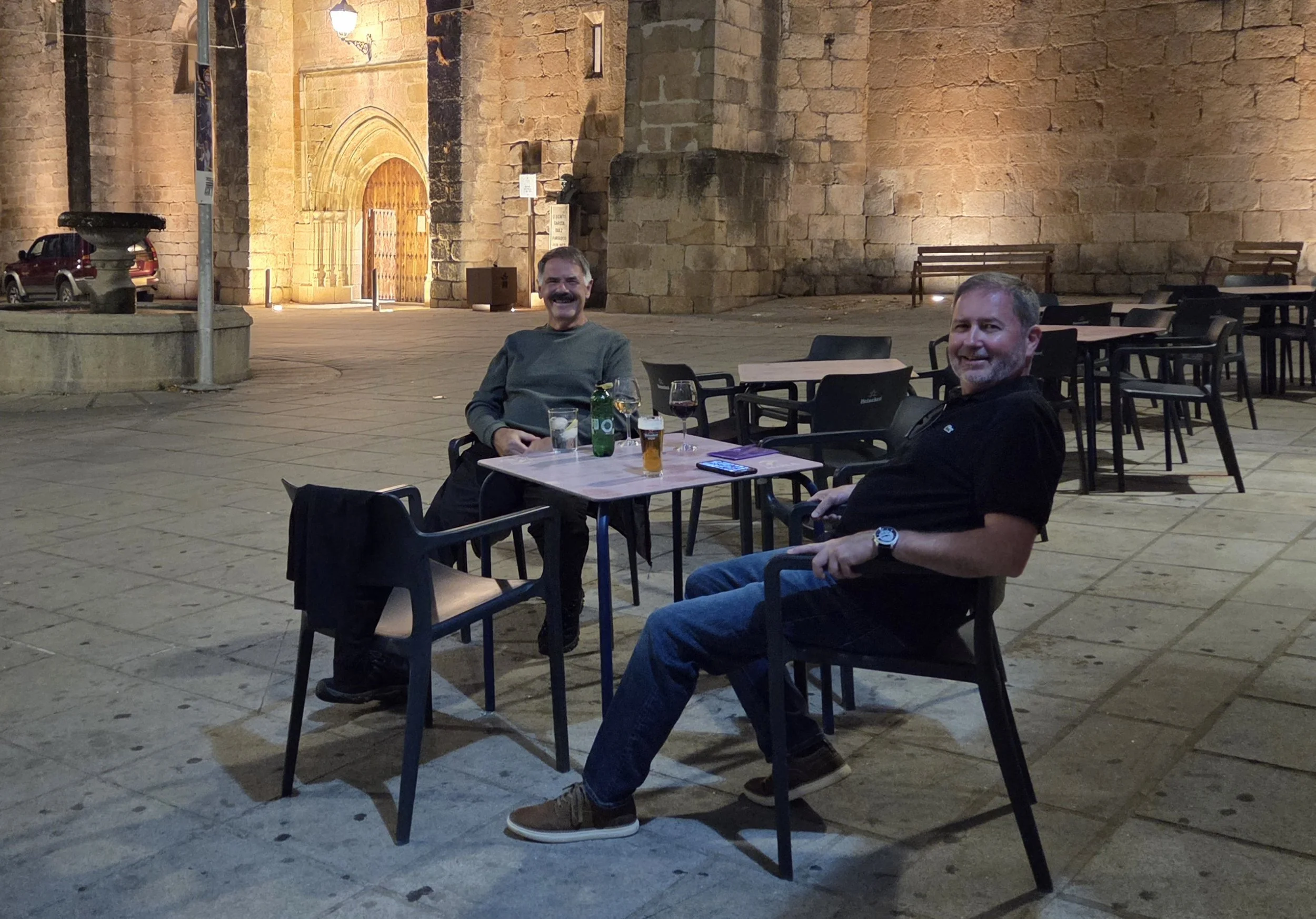
Tips to Get the Most Out of Your Camino
Fifteen years on the road, five routes, more pilgrim menus than we can count. Here is what we actually know.
This is not a complete Camino encyclopedia. It is the things that genuinely matter — the things we wish someone had told us before our first walk. We have not walked the Camino in a single 30-day stretch, so we will not pretend to know what happens after day 11. What we do know is staged walking — 8 to 11 days at a time, year after year — and what makes that experience work.
Walk more than five days if you can
Something happens around day four or five that you cannot get any other way. Your legs adjust — a normal day stops leaving you sore at night or stiff the next morning. The rhythm of daily walking takes hold. And somewhere in that rhythm, you start to notice that the walking itself, not the destination, has become the point.
Every pilgrim experiences this differently — some sooner, some later, some more dramatically than others. But it happens. If you only have five days, you will still have a meaningful walk. But if your schedule allows for eight to ten, you give yourself the chance to feel the shift and let the walk do its work.
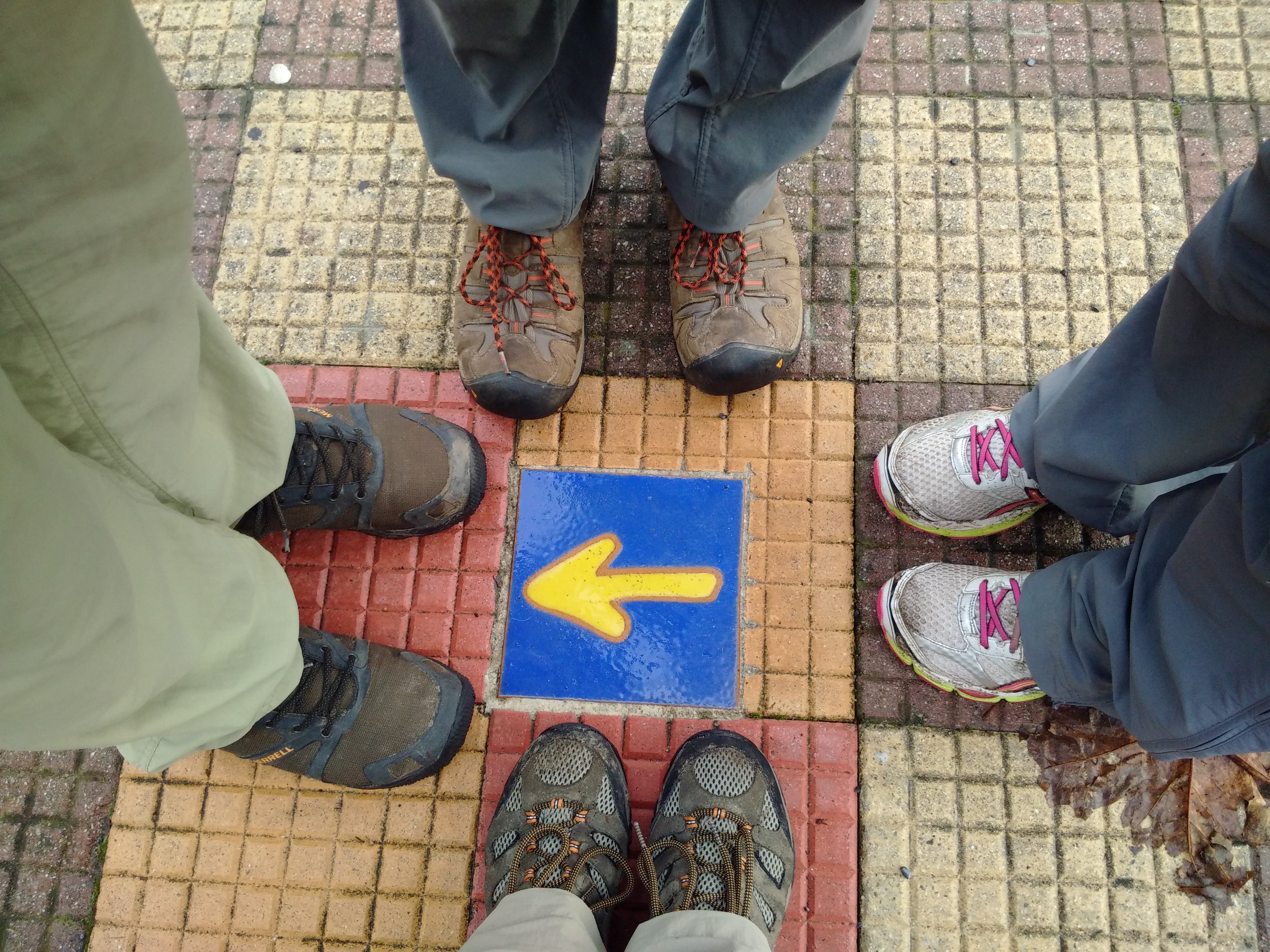
Footcare is the most important thing you will do
It is not the walking that causes problems on the Camino. It is walking 15 to 25km every single day, day after day, without a rest. Check your feet every single day, even when nothing hurts. A hiking shoe with a reasonably stiff sole is all you need — already broken in before you leave home. Ensure the shoe is a size larger than normal - your feet swell and become bigger after a few days of walking.
If you feel a hotspot during the day or notice a red area when you check your feet, tape it immediately. Don't wait. Leave the tape on until it naturally falls off in the shower, then retape if needed. After ten Caminos, we know exactly where our own feet develop hotspots and tape those spots on day one, before anything even starts to hurt.
We use plain white cloth adhesive tape. Some pilgrims prefer surgical tape, others swear by duct tape with or without pre-wrap. We find moleskin too thick. Use whatever works for your skin and feet specifically.
If a blister does form, apply a blister pad and tape over it. Prevention is everything. Nothing makes a Camino harder than sore feet and bloody blisters — and nothing is sadder than watching the “Camino Shuffle,” the slow, wincing walk of a pilgrim who let it go too long. You'll see it on every walk. Don't be the one doing it.
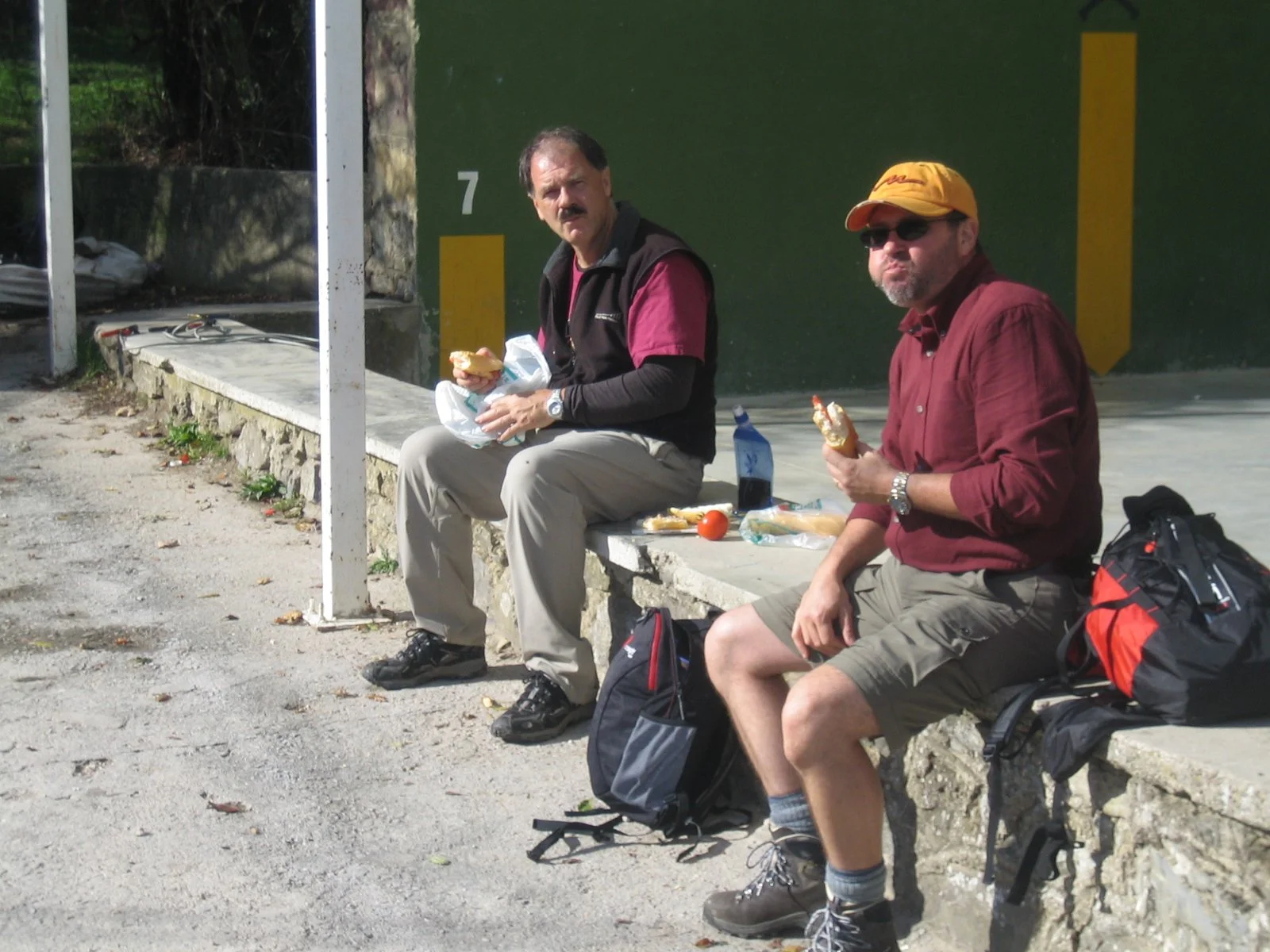
The pilgrim lunch — our favourite ritual on the Way
Stop in the morning at a tienda (store) for a baguette, local cheese, a few slices of jamón. Tiendas also sell bottled water, beer, and wine, usually cheaper than a bar. Carry it in your day pack and stop somewhere beautiful on the trail for what we call the pilgrim lunch — one of the simplest pleasures of the entire Camino. Bring a small pocketknife and a corkscrew. Both pack easily.
Water — bring a bottle, skip the tap
Carry 500ml to 1 litre at all times. Spanish tap water is generally safe but the taste varies and is often not great — we buy bottled water at the mercado or a bar when necessary. A plastic bottle works perfectly well in your day pack if you forgot your water bottle.
Carry pain relief — and use it
We carry ibuprofen in our packs on every walk. We take it when our feet start hurting during the day, or in the morning if our body is telling us something before we even start. Not every day — but when you are in pain and still have 15km or more ahead of you, the right choice is to manage the pain, not to turn the day into a battle between your mind and your body.
This matters even more if your luggage is transferring ahead of you — you cannot simply stop walking because your feet hurt until you reach your hotel. Far better to manage discomfort early than to be forced into a difficult decision later.
Poles help more than you might think
With a day pack and reasonable fitness, poles are optional — useful on steep descents but not essential. With a full pack, or more moderate fitness, poles make a real difference on elevation days, taking pressure off your knees on the downhills, which is where most people struggle. Most days have elevation changes.
Dress for the day you walk
Spanish weather swings more than people expect — cold mornings, warm afternoons, sudden rain that clears an hour later. Layers are everything. A light, packable rain jacket lives in your day pack every day, rain or not. A hat matters more than people think — sun protection on the meseta, warmth on cold mornings.
How much Spanish do you need?
Less than you think, but more than none. Buen camino, un sello por favor, una caña, la cuenta por favor, dónde está el baño will take you a long way. Nobody expects fluency, and nobody will think less of you for using a translation app at the counter.
Do you need to train?
It is genuinely difficult to train for the specific demand of the Camino — the problem is rarely the walking itself, it's walking every day, consecutively, without rest. Regular walking beforehand and broken-in shoes matter more than intense training
Eat on a pilgrim's schedule
Lunch typically runs 1pm to 3:30pm, dinner rarely starts before 8pm. Bars and small restaurants often close in between, so plan your stops accordingly. The pilgrim menu — an inexpensive, fixed-price three-course meal with wine, found in nearly every town — is one of the great practical pleasures of the Camino.
Bring some cash, skip the Amex
Small bars, shops, and albergues often run cash-only. ATMs are easy to find in larger towns. American Express is rarely accepted outside major hotels and cities — a Visa or Mastercard plus some euros covers almost everything.
The farmacia is your friend
Every town of any size has one, marked by a green cross. Spanish pharmacists are highly trained and used to handling exactly what pilgrims run into — blisters, sore muscles and joints, sunburn, a stomach upset. They are an important pilgrim resource. Spanish supermarkets do not sell painkillers the way North American stores do — the farmacia is the only place to get them, so carry a small supply from home for the first day or two.