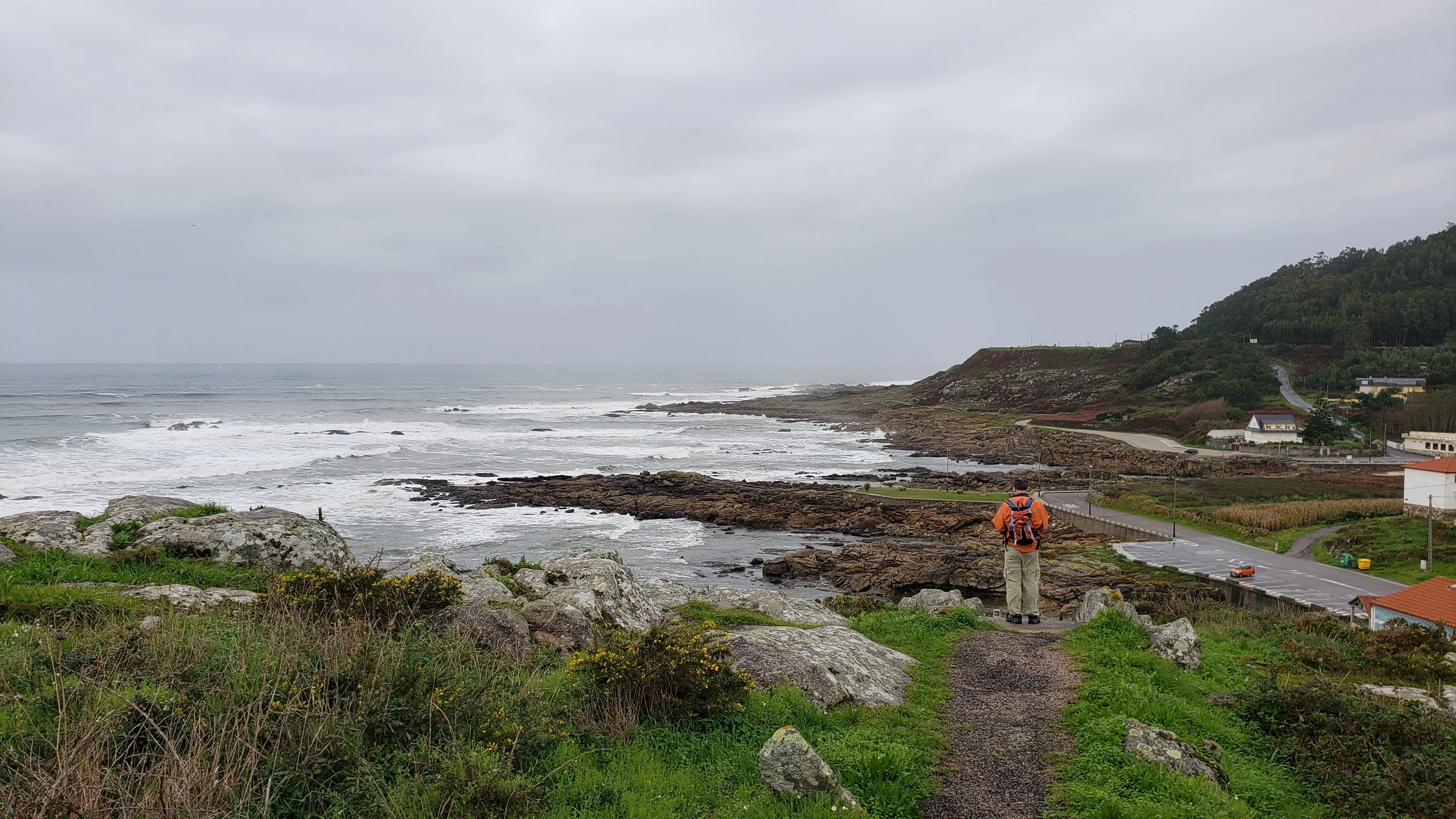
Can I Walk the Camino?
The honest answer, from someone who has walked it many times — and watched hundreds of others do it too.
The question I hear most often isn't about routes or accommodation or what shoes to buy. It's this one. Usually asked quietly, sometimes with a laugh that's half embarrassment: Can someone like me actually do this?
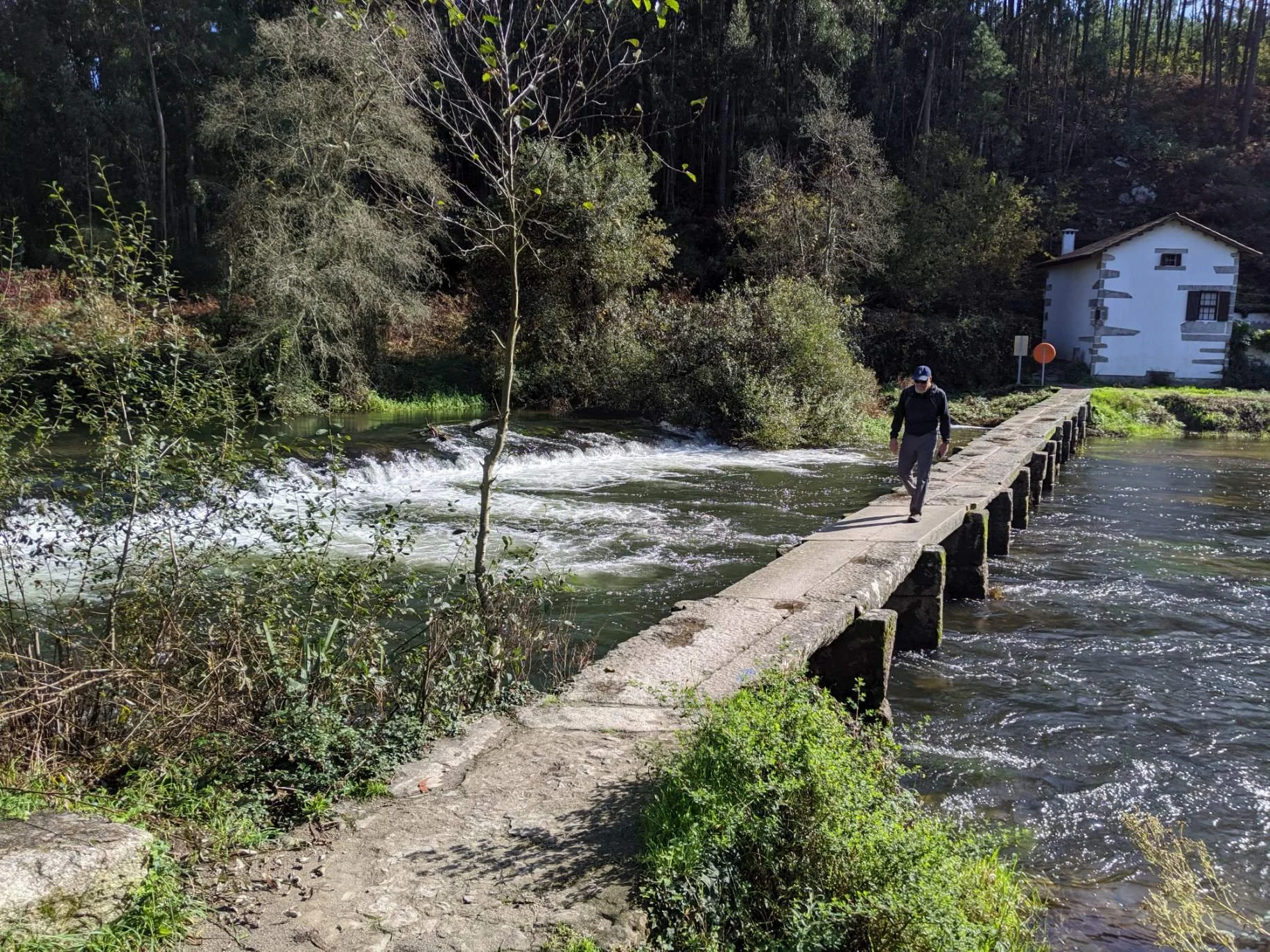
I've been walking the Camino since 2011. I've walked the Francés, the Inglés, the Coastal Portugués, to Finisterre and Muxía and I'm currently mid-journey on the Via de la Plata. In all those kilometres, across all those stages, I have never seen a pilgrim who looked the way most people imagine a long-distance walker looks.
What I have seen: people in their 70s with walking poles. A Belgian woman with a custom aluminum cart — built to her specifications, ordered online from Germany — that carried her pack and attached to her waist belt. She had started the Camino from her house in Belgium in August and was meeting her daughter in Santiago for Christmas. A 65 year old Norwegian walking, with a full pack, from Barcelona to Finisterre - lighthouse to lighthouse. People in their 20s and 30s figuring out their next chapter. Couples who hadn't walked more than a city block in years. People of every kind.
Almost all of them finished what they came to walk. Or came back again (and again) and finished it.
You don't have to walk all of it
This is the thing most people don't know — and it changes everything.
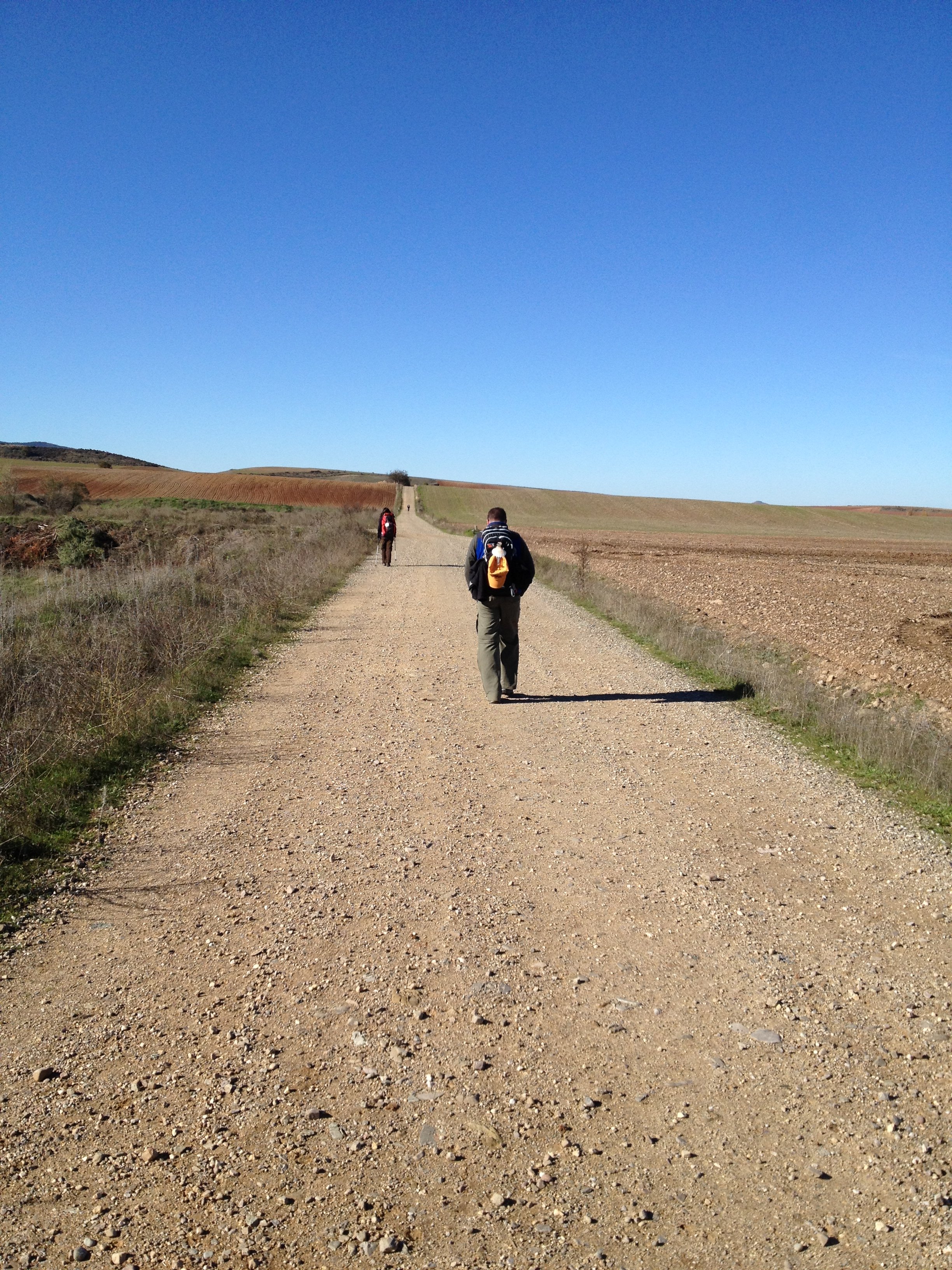
When my friends and I first walked the Camino in 2011, we didn't start in Saint-Jean-Pied-de-Port and walk 800 kilometres to Santiago. We walked three days across the Pyrenees and stopped in Pamplona. That was it. That was our first Camino.
The next year we came back and walked the next sections — Pamplona to Burgos. Then Burgos to León. Then León to Sarria and finally, Sarria to Santiago and onto Finisterre. Over several years, fitting around work and family and the reality of life in North America, we walked the whole thing. By the time we reached the Cathedral, we had earned every step of it.
Walking 800 kilometres in one go is not the Camino for a lot of people. It's the Camino for people who have made it their full purpose for six to eight weeks — often because something has happened in their lives that demands that kind of time and space. That's a valid and powerful reason to walk. But it's not the only one.
Carrión de los Condes
At the Monasterio San Zoilo we met five Spaniards in their fifties — old friends from Madrid who walk the Camino together a couple of times a year, always on long weekends. They started in Saint-Jean, the same as us, but with no fixed end point. They simply walk until the weekend runs out, go home, and pick up exactly where they left off next time. For them the whole Camino is not a single trip. It is an ongoing, years-long pleasure they return to whenever they can.
Many Pilgrims we have met walked the Camino in stages: a week or 2 or 3 of walking, a couple of travel days on either end, fitting into a regular holiday. That's enough to feel everything the Camino gives you. Enough to arrive as one person and leave as someone who has shifted, even slightly, in a direction they didn't expect. Enough to bring you back again.
Start in a town that makes sense for your schedule. Walk until you need to stop. Come back next year or the year after and carry on.
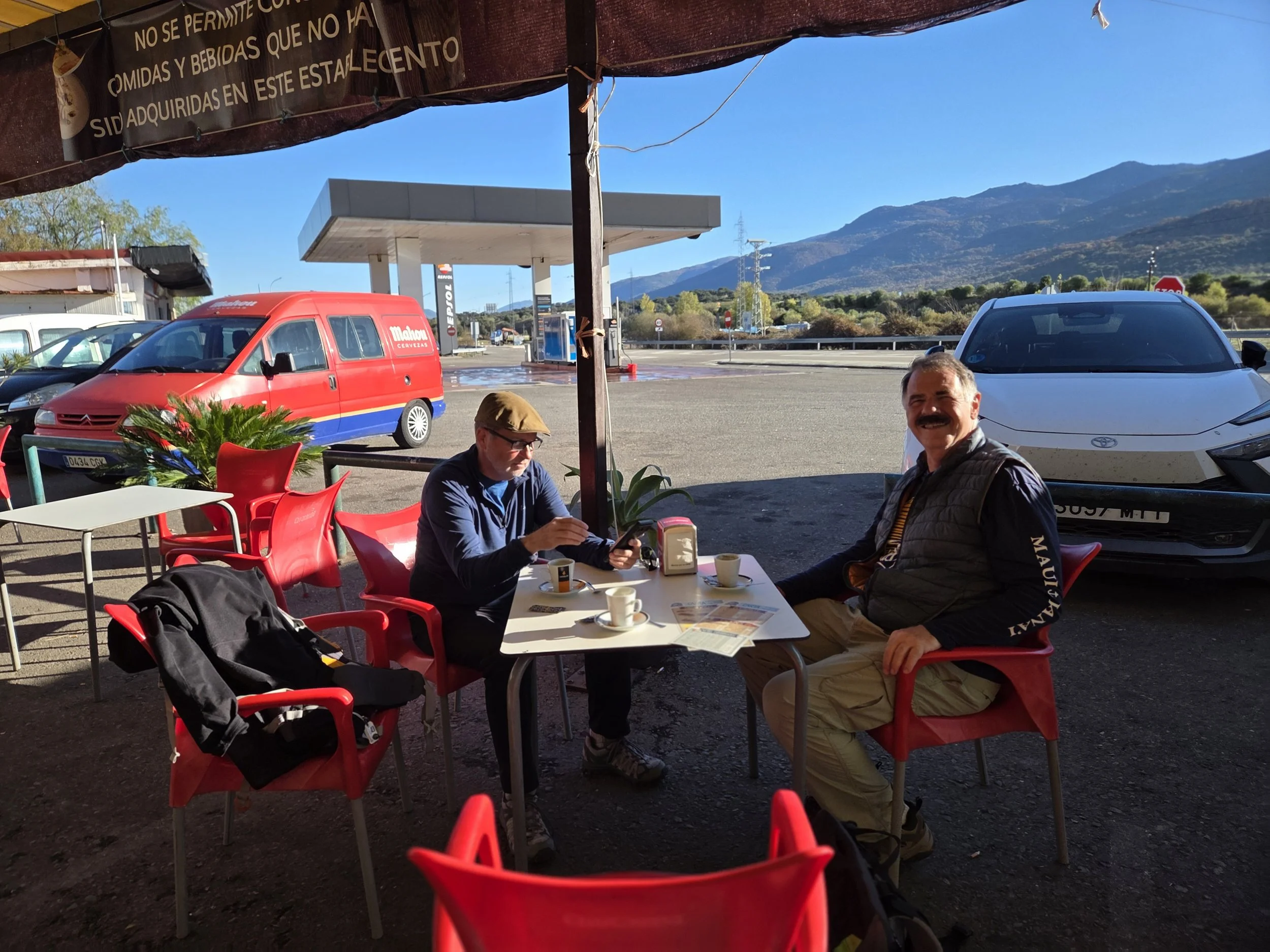
What about the physical side?
We won't tell you the Camino is easy. It isn't. Most pilgrims experience some physical discomfort — blisters, aching knees, the particular tiredness and soreness that comes from asking your body to do something unfamiliar day after day. Working through that discomfort is part of the experience. It can’t be avoided. It's where a lot of the Camino's effect comes from.
But here's what we've actually observed: the Camino isn’t looking for athletes. It’s looking for people who keep going.
On the meseta - past Burgos
A woman named Jean — late 60s, from California — started the Camino carrying a full pack. A few days past Burgos, crossing the meseta, she decided her pack was too heavy and arranged a luggage transfer for the rest of the journey. She didn't stop. She adapted, and she kept walking. That's the Camino working exactly as it should.
Most pilgrims are in average physical condition for their age. They haven't done anything special to prepare. They figure it out as they go. The Camino has a way of meeting you where you are.
That said — some preparation makes the experience significantly better. The right footwear, a sensible pack weight, a training plan that gets your feet and legs ready for consecutive days of walking: these things matter. Part of what Camino & Beyond does is make sure you arrive prepared, not just excited.
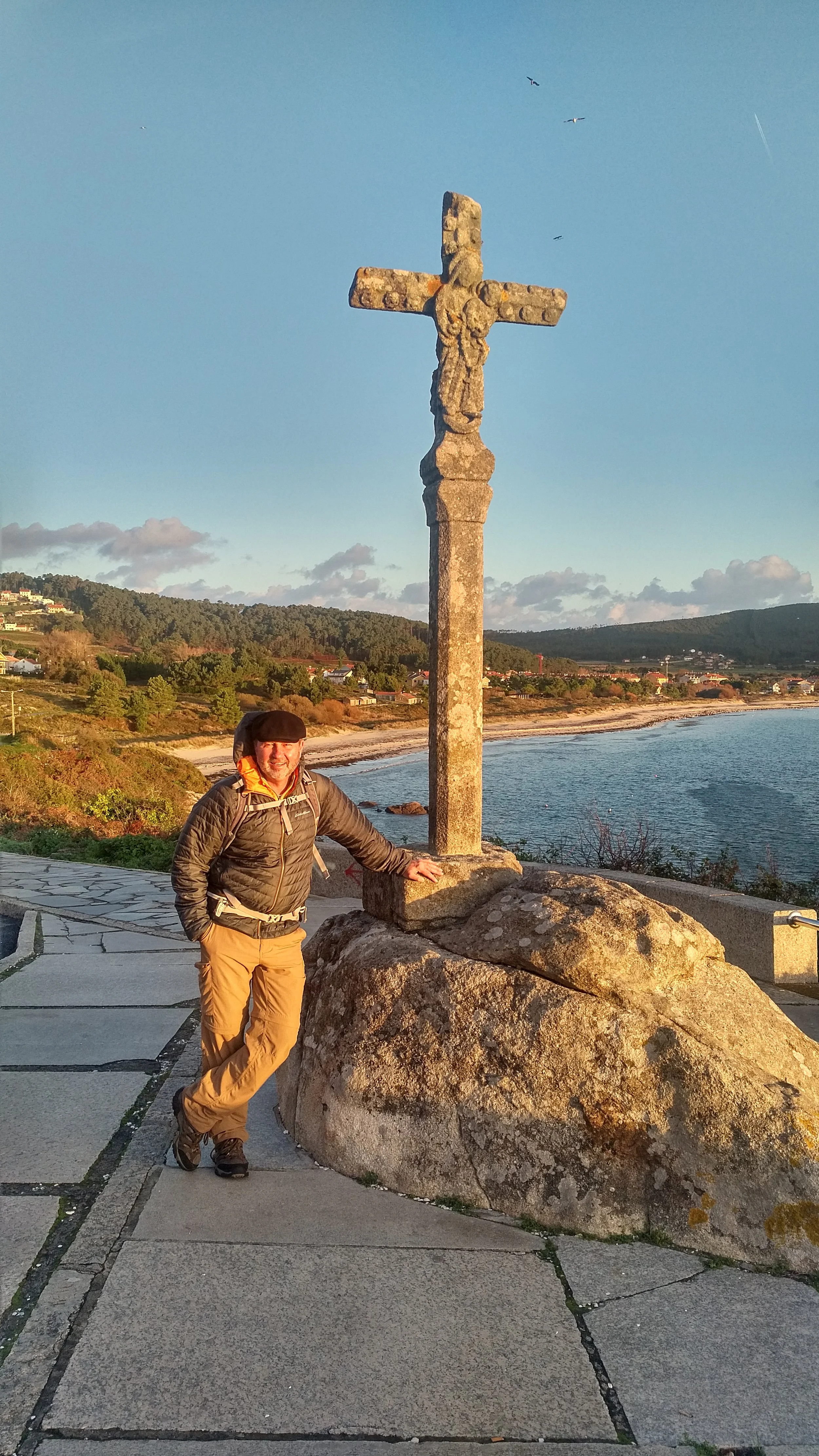
If you're thinking about walking alone
Solo travellers — particularly women walking alone — ask me about safety more than almost anything else. Here is my honest answer: the Camino is one of the safest places I have ever walked. It is a shared path. There are always people around you, ahead of you, behind you.
More than that — the Camino has a social logic unlike anywhere else. You don't walk alone for long unless you choose to.
Sarria to Santiago
We met Claire on the first morning out of Sarria. She was 27, South African, walking solo, carrying a large pack, staying in albergues — the full traditional pilgrim experience. Within an hour or two of leaving town, she had fallen into step with us. She ate dinner with us that night. She met us the next morning and the morning after that. For four days she walked with us, three middle-aged men she had known for less than a week, before we all converged on Santiago. Jim still exchanges the occasional message with her ten years later. The plan is still to walk another Camino together.
The Camino provides what solo travellers need. Space, if that's what you're looking for. Company, if that's what the day requires. The path has its own way of finding you what you need.
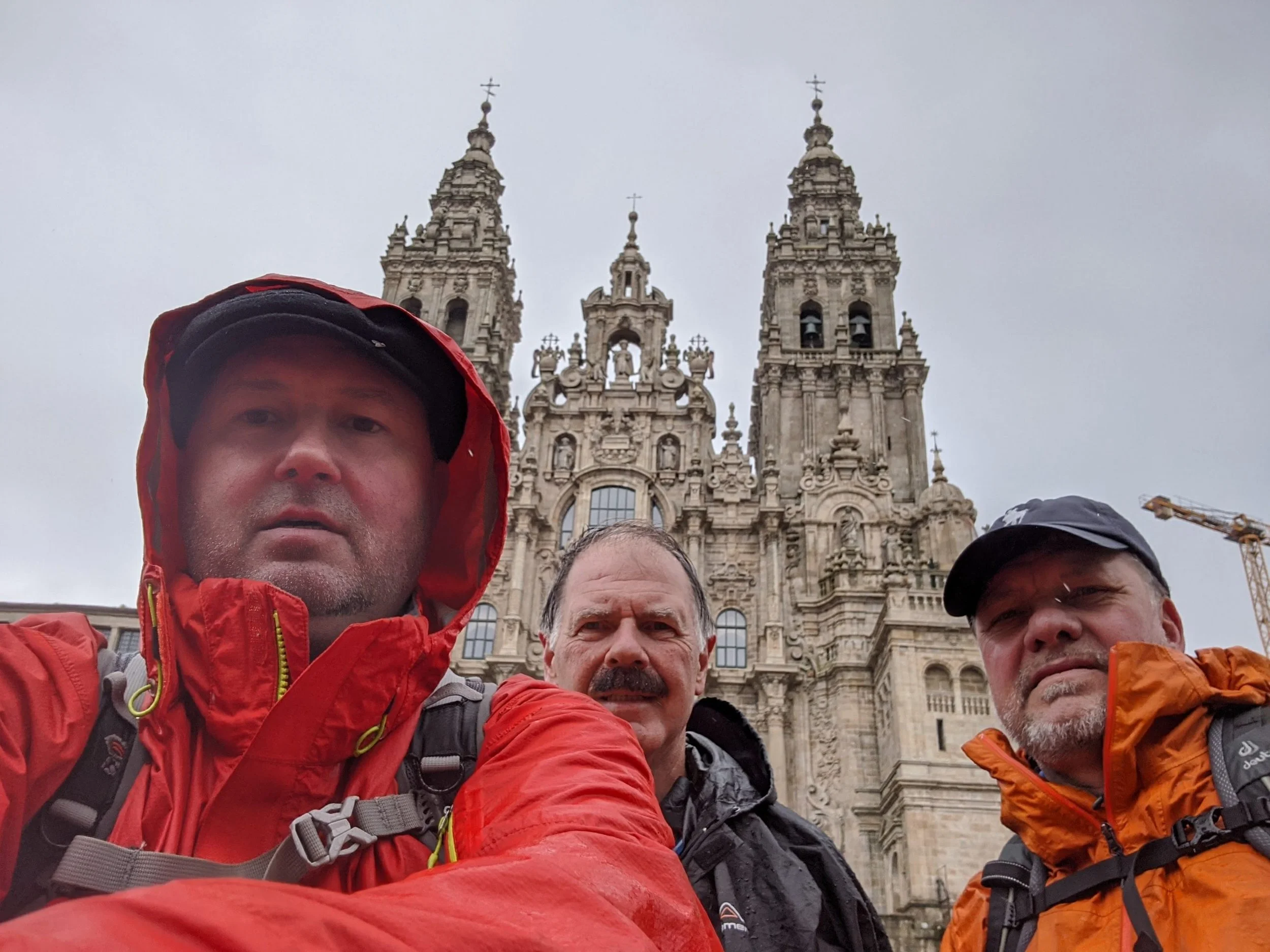
If you're 50+ and wondering
You're most of the people I walk with. And you're the people who seem most surprised by what they're capable of.
A friend of mine — 65, an athlete, fit but not someone who had walked long distances — reviewed this website recently. His reaction to the idea of walking across Spain: I'd have to be convinced I could actually do it.
That's the conversation I want to have with you. Because that hesitation — I'm not sure I'm up to it — is almost never really about fitness. It's about not knowing what you're signing up for. Once you understand how the Camino actually works, what a realistic stage looks like, what happens when you have a hard day — the hesitation usually dissolves.
Walking 15 to 25 kilometres a day over varied terrain is within reach for most people who are reasonably active. It helps to prepare. It helps to have the right support in place. It helps not to carry everything you own on your back.
The 50+ pilgrims I've walked with tend to get more from the Camino than anyone. They have more to bring to the silence. More to process in the walking hours. More clarity waiting for them at the other end.