Choosing your first Camino
Our thoughts, and how we actually answer this when someone asks us in person.
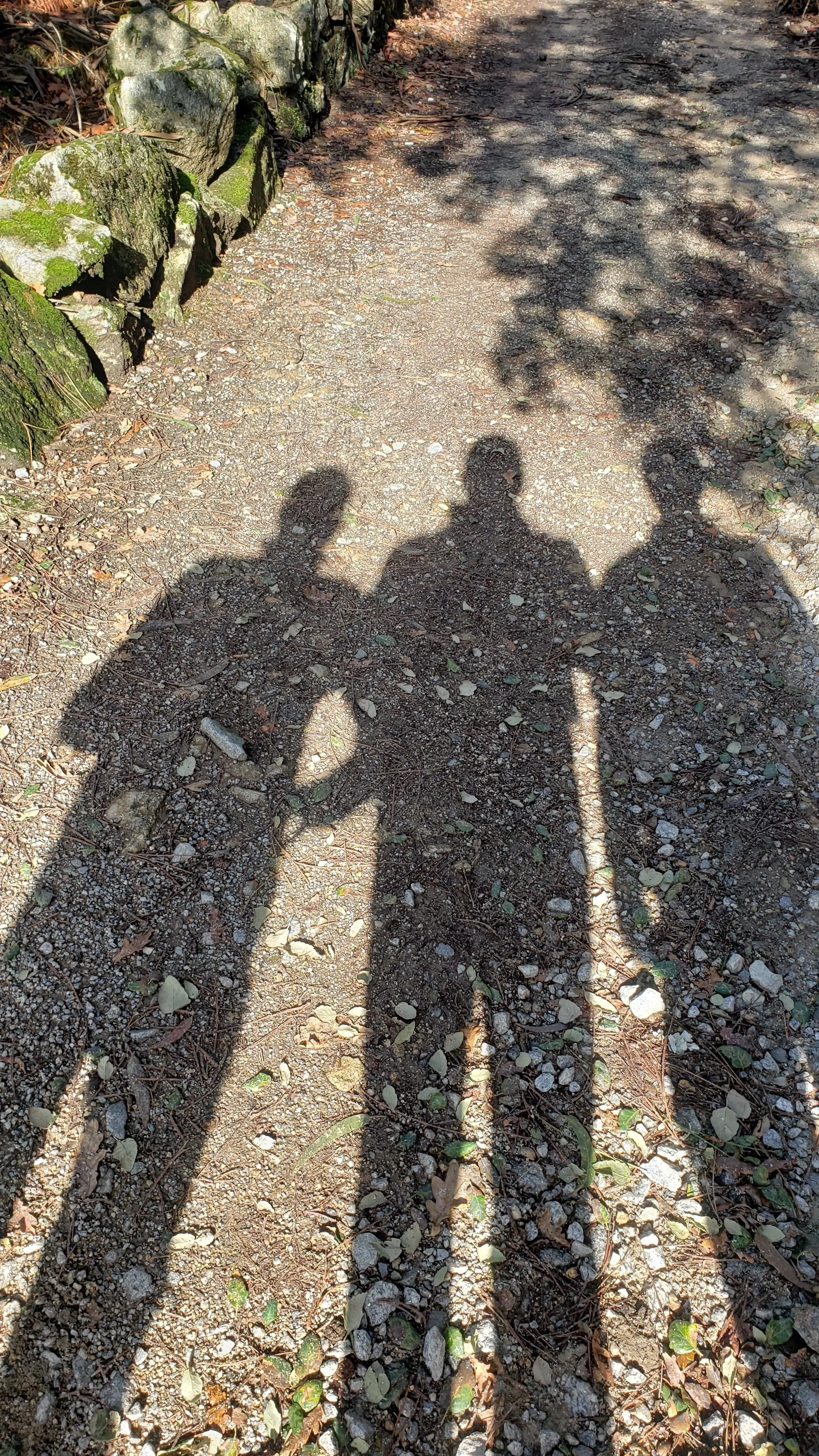
Ask ten people which Camino you should walk and you'll get ten confident answers, most of them wrong for you specifically. Not because anyone's lying — the Francés really is wonderful, the Portugués is quieter, the Inglés really is short and sweet. They're all telling the truth about the route they walked and loved. They're just not asking the questions that matter for you.
We've walked ten Caminos across fifteen years, and if there's one thing we've learned, it's that the right Camino has almost nothing to do with which one is "best." It has to do with you — how many days you actually have, what time of year you can go, whether this is likely your only Camino or the first of several, and honestly, why you're doing this at all. Get those four things straight and the route usually picks itself.
1. Start with the truth about your days, not the map
Everyone starts by looking at a map of Spain and imagining themselves walking all of it. Almost nobody has the time for that, and that's fine. The honest question isn't "which Camino is the best one" — it's "how many days do I actually have, and how many kilometers a day do I actually want to — or can — walk?"
Be honest with yourself here, not aspirational. If a comfortable day for you is 15–20km with time to sit in a plaza and drink something cold, plan around that number, not the 25–30km days you've read about in someone else's blog. The Camino is fine at a gentler pace. It has nothing to prove and neither do you.
2. Are your dates fixed, or is there room to move?
If you're locked into specific dates for work or family reasons, or simply can't walk in the heat, that's a fact to plan around. But if there's any flexibility at all, it's worth asking yourself a second question: do you want the crowded, festive, pilgrim-bar-every-evening version of the Camino, or the quiet one?
Here's an honest, slightly opinionated take: walking the full Camino Francés in November is one of the best-kept secrets in long-distance walking. Fewer pilgrims, more room in the small towns, and a kind of quiet that helps the road do what it's supposed to do. You trade some daylight hours and a bit of warmth for it — and in return, skip the crowds and the worst of the Spanish summer heat. Worth knowing plainly before you commit, not discovering on day one. But if you're chasing the classic, bustling, communal energy of Camino season, there's nothing wrong with that either. It's a genuinely different experience, not a lesser one.
3. Is this your one Camino, or might there be others?
This is the question people are least prepared for, because most first-time pilgrims genuinely don't know the answer yet — and that's completely fine. But it's worth sitting with for a moment, because it changes how much you try to pack into this trip.
If you suspect this is your only shot, there's real pressure to see and do everything meaningful in the time you have — walking into Santiago needs to be part of that trip. If you suspect this might be the first of several, you can relax a little. Consider starting at the classic, true beginning, St Jean Pied de Port, over the Pyrenees, even if you only have time for the first week or two. Maybe you'll feel the pull to keep walking all the way to Santiago before your time runs out. Or you might simply come back next year for the next stretch. Neither answer is right or wrong — it's just useful to know which story resonates before you build the itinerary.
4. Why are you walking the Camino?
We ask this one gently, because it isn't anyone's business but yours, and half the time the honest answer is "I don't fully know — something is just pulling me toward it." That's a completely valid answer, maybe the most common one we hear.
But it's worth a moment of honesty with yourself. Are you craving solitude and time alone with your own thoughts? Is there something in your life you feel it's time to work through? Are you craving the camaraderie of walking alongside other pilgrims, sharing a table at the end of a long day? Or are you genuinely not sure yet, and just know something is calling you toward the road? Each of those points toward a different kind of Camino.
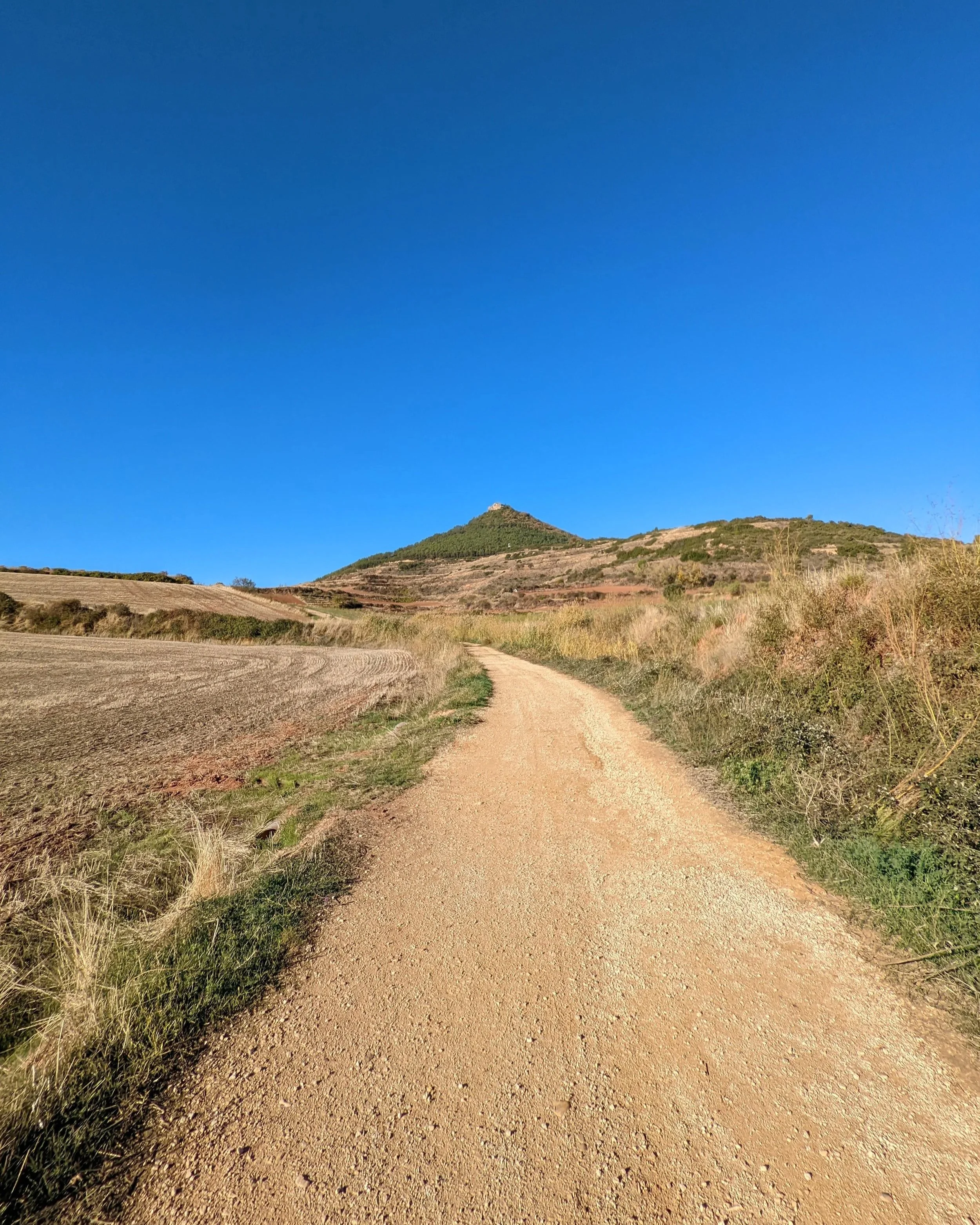
The routes themselves, honestly
Once you know your days, your dates, and your reasons, here's how the actual candidates stack up — no diplomatic hedging, just what we've found to be true.
The Camino Francés is the classic for a reason. It's the best-marked route in Spain, with the most towns, the most walking stage flexibility, the most infrastructure, and the deepest pilgrim community of any Camino. That last part matters more than people expect, especially for solo walkers. Even pilgrims who are certain they want to walk alone often find, two or three days in, that the option to join a table at dinner is what actually carries them through a hard day. The Francés gives you that choice every single evening. Walking it in the fall keeps all of that — the towns, the markers, the community when you want it — while trading away most of the crowds. It's our honest first recommendation for most first-time pilgrims, and the fall is when we'd tell you to go.
Walking the whole Francés, start to finish, is five to six weeks — more than most people can commit to on a first Camino, and it's completely fair to hesitate at that. You don't have to choose all or nothing. Do it in sections, starting in St Jean — come back again next year, or the year after, and walk some more. With two to three weeks and only time for one Camino, we'd point you toward starting in León or Ponferrada instead. Starting in León means you still get to carry a stone up to the Cruz de Ferro, one of the quietest, most moving moments on the entire route. Either way, you walk into Santiago at the end — and we'll say this plainly: go to the Pilgrim Mass. The Botafumeiro alone, that enormous incense burner swinging the full length of the cathedral, is worth the trip by itself. Then keep going, out to Finisterre and Muxía, and let the ocean be the real ending. One more piece of very specific advice, earned the hard way: if you happen to arrive in Muxía on a Saturday night, join the town at the nightclub. Just trust us on that one.
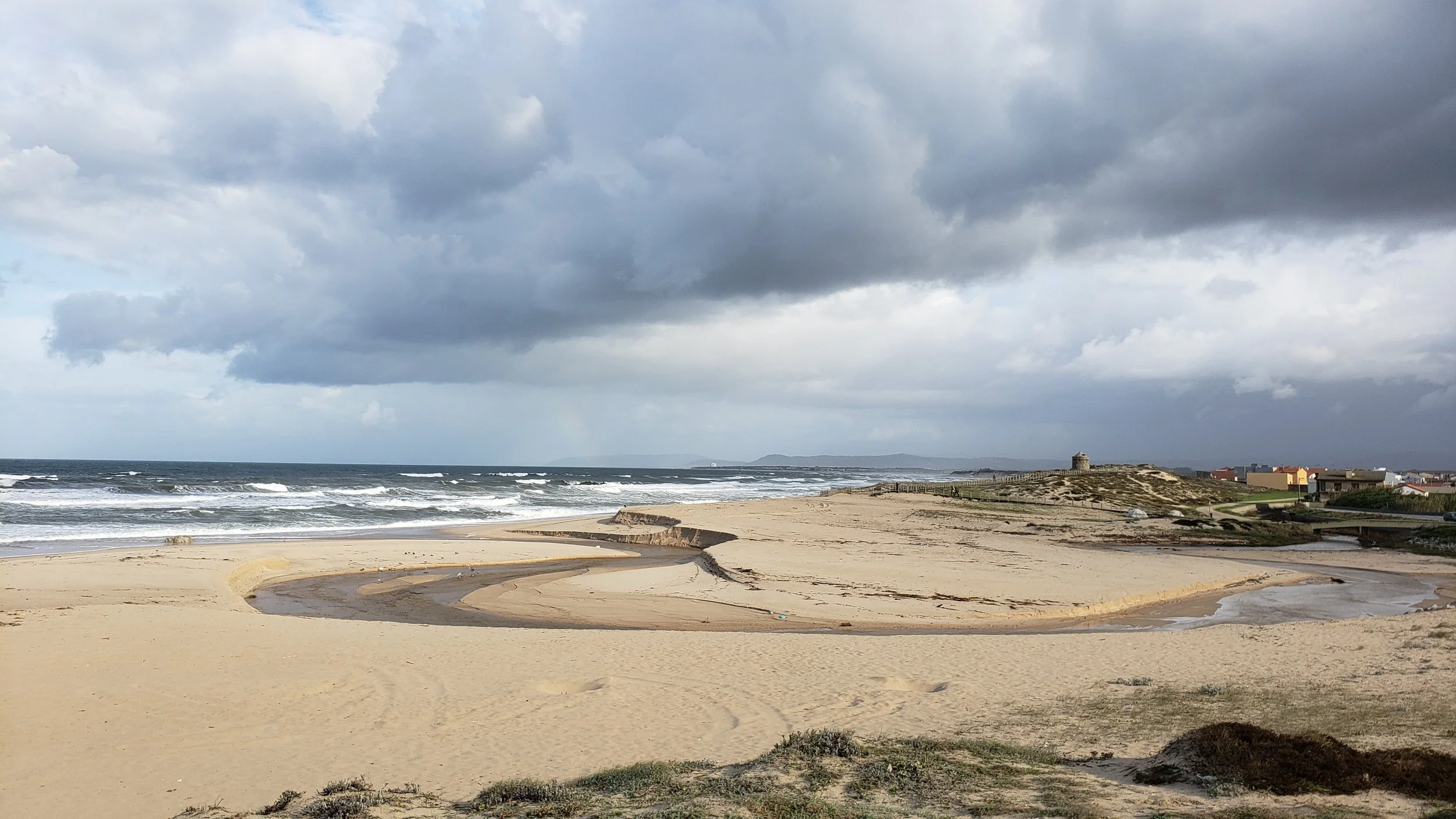
The Camino Português Coastal is genuinely breathtaking — long stretches of open Atlantic coastline, both endless beaches and rugged rock, before the route turns inland into Galicia, unlike anything the Francés offers. It rains more than people expect, and there are far fewer pilgrims out there with you — the pilgrim community is small, especially in the fall, and the days can feel long, wet, and lonely for a solo walker. The waymarking is fine, just not as obvious as the Francés. None of that makes it a lesser Camino — just an honest picture of what a first-timer takes on by choosing it over the Francés.
The Camino Inglés is short, which appeals to people with limited time, but a lot of it is on pavement, and the on-Camino lodging options are thinner than on the better-known routes. In our opinion it's a better fit as a return Camino than a first one.
The Vía de la Plata is, frankly, spectacular — and long, lonely, and poorly marked (in stretches) most of the way. We love it. But we would not recommend it as anyone's first Camino. It rewards experience you don't have yet on your first walk.
Finisterre and Muxía aren't really a separate Camino at all — think of them as the coda. If your days allow it, walk out from Santiago and let the ocean be the real ending. If not and you're fairly sure you won't be back, it's worth simply arranging a transfer out to stand at the cliffs, rather than skipping it entirely. And if you do have to choose, there's a real case for leaving it for a future trip instead — coming back to walk out to Finisterre on its own, with no cathedral crowds and nothing left to rush toward, is something people who've done it tend to describe as more moving than doing it as an add-on the first time. You'll appreciate it more when it's the whole point of the walk, not the last few days of a longer one.
A word about the Compostela — and the rule change most people haven't heard about
For years the rule was simple: to earn your Compostela, the certificate the Pilgrim Office in Santiago gives to pilgrims who walk, you had to walk the last 100km into the city. That single rule is why Sarria became the busiest starting point on the entire Camino. It sits just over 100km out, and through most of the year hundreds of pilgrims set off from it every morning, many of them on their first long walk, and some on what's closer to a walking holiday than a pilgrimage. Nothing wrong with any of that, but it's a very different road from the one the rest of the Francés gives you.
The rule has changed. The Pilgrim Office now asks for at least 100 continuous kilometers on a single recognized Camino — not necessarily the last 100 — with two sellos (stamps) a day in your credencial, and the final stage walked on foot into the cathedral. In plain terms: you can walk any stretch of 100km or more on any Camino, collect your sellos, then travel to the start of the last stage, walk that final day into Santiago, and collect your Compostela.
That opens up some of the most beautiful walking in Spain. On the Francés alone, think about 100km over the Pyrenees from St Jean and down through Pamplona; through the vineyards of La Rioja; across the stark, enormous sky of the meseta; or through the Bierzo valley and up over O Cebreiro into the mountains of Galicia. Walk your week there, then take the train or bus west, walk the last day in from O Pedrouzo, and be at the Pilgrim Mass with your Compostela in hand.
Our honest take: if this is likely your only Camino and you only have a week or so, this is the option we'd choose over Sarria. But if you think you'll be back, don't spend your arrival this way. Walking all the way into Santiago at the end of a long road — the outskirts, the old town, and finally the cathedral square on your own two feet — is something you only get to do for the first time once. Save it.
One practical note: get your credencial stamped and dated at least twice every day, start and finish included, and check the Pilgrim Office's current guidance before you go. The office in Santiago makes the final call, and it's a long way to travel to find a gap in your stamps.
Putting it together
A few real shapes this tends to take, once those four questions are answered honestly:
For a first Camino, we'd suggest the classic experience and the option of community, even if walking solo — the Camino Francés. If you know you'll be back for another Camino someday, start at St Jean, even if you only have a week — walk what you can, and come back for more later. If you've got the full five to six weeks, walk it start to finish. Either way, if your dates are flexible and quiet matters to you, go in the fall — you keep the towns, the markers, and the community when you want it, and trade away most of the crowds.
First Camino (maybe your only one), want that same classic experience, but two to three weeks is closer to reality: start the Camino Francés in León or Ponferrada instead. You still get real Camino Francés — León adds the Cruz de Ferro (very worthwhile) — you still get Santiago and the Pilgrim Mass, and you still get to walk on to Finisterre and Muxía. A genuinely complete first Camino, just not the entire five to six weeks.
If you are craving real solitude and dramatic coastal scenery, and comfortable with some rain, long lonely days, and paying closer attention to navigation than the Francés requires: the Camino Português Coastal is a genuine, complete Camino of its own that can be completed in 11 to 12 days.
Only have a week, and this might be your only Camino: two honest options. Sarria into Santiago gets you Monte do Gozo and that first sight of the cathedral spires — the classic Francés approach, crowds and all. Or, our pick: walk your best 100km somewhere else on the Francés — the Pyrenees, La Rioja, the meseta, or the Bierzo — then come in for the last stage and the Pilgrim Mass. Want the classic arrival and don't mind the crowds? Sarria. Want the most beautiful week of walking you can fit in? Pick your 100km. Both qualify for a Compostela.
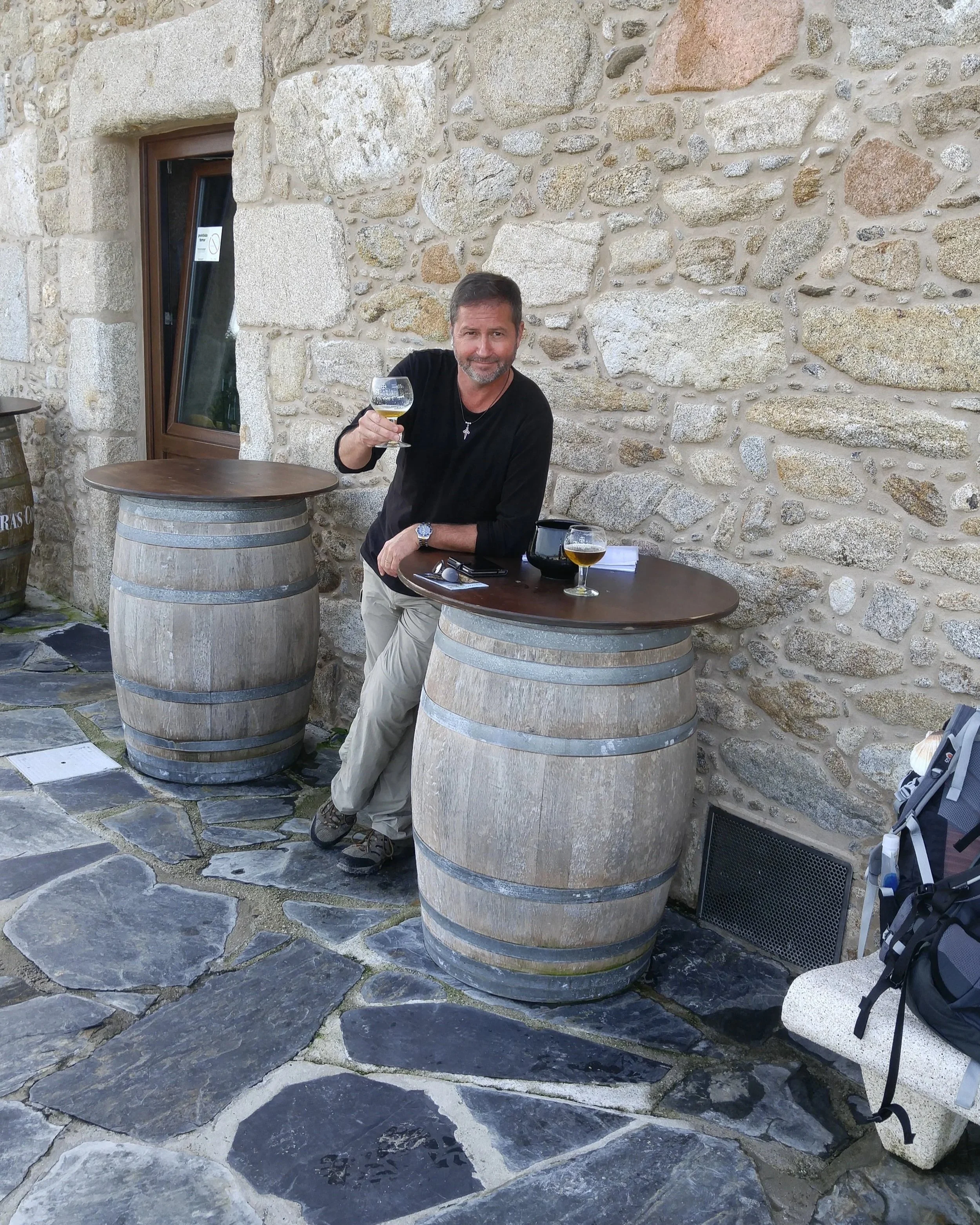
Two Caminos to save for later: the Camino Inglés and the Vía de la Plata. Both are wonderful, and neither is where we'd start. The Inglés is a short, quiet week that ends in the very same plaza — a lovely return trip when time is tight (start in Ferrol if you want another Compostela; A Coruña, at about 75km, falls short). The Vía is the opposite: long, wild, and demanding, with long days and often no towns between the start and finish — more like a classic long-distance trek with a Spanish twist than a typical Camino. Walk your first Camino, then come back for these.
Time to spare after Santiago: walk out to Finisterre or Muxía and let the ocean close the story. Short on time and not sure you'll return for another Camino: arrange a transfer out rather than skip it. Otherwise, consider saving it entirely — it may mean more as a trip of its own.
The honest bottom line
There is no single best Camino. There's only the one that fits the days you actually have, the season you can honestly commit to, the story you're telling yourself about whether you'll be back, and the reason — known or not yet known — that's pulling you toward the road in the first place.
That's really all we're trying to figure out when someone reaches out to us. Not to sell a route, but to ask the right questions so the answer becomes obvious — to you, before it's obvious to us.