The Silver Way · Seville to Santiago, Two thousand years of history
The Via de la Plata is the Camino’s elder statesman. Long before anyone walked to Santiago, Roman engineers laid a road north from Mérida to Astorga to move legions, gold and news across Hispania, with another running south to Seville. Walk it from bottom to top and you walk through two thousand years of Spanish history.
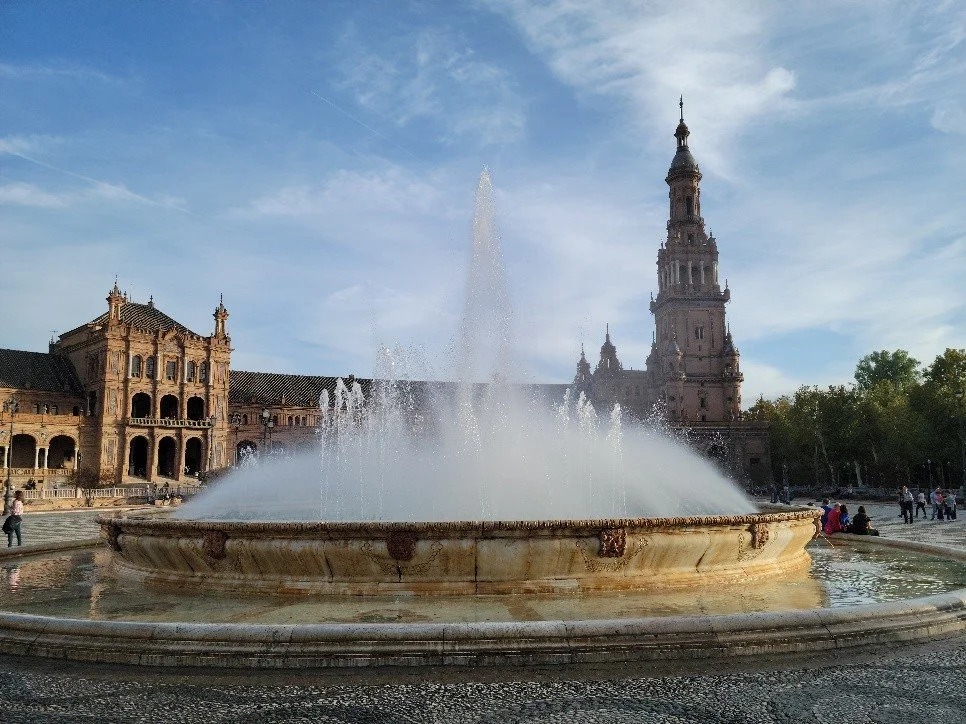
Plaza España, Seville
And the silver in the road’s name? There isn’t any. The Moors called the paved Roman road al-balat, and over the centuries Spanish ears heard plata, which means silver. So Seville got the silver, and the Via got the name.
It starts in Seville, which for more than five centuries was a jewel of al-Andalus, Moorish Spain. The cathedral’s bell tower, the Giralda, began life as the minaret of the great mosque. Seville also saw Spain’s darker side: in 1481 Ferdinand and Isabella’s new Inquisition held its first auto-da-fé there. A few decades later the city was the richest in Europe. Every ship from the New World had to report to Seville, and the treasure fleets sailed up the Guadalquivir loaded with silver. Columbus is there too, in a grand tomb in the cathedral. Getting there took him almost four hundred years: he was moved from Valladolid to Seville, then to Santo Domingo, then to Havana, and finally back to Seville in 1898. That makes him possibly the most travelled man in the cathedral, dead or alive.
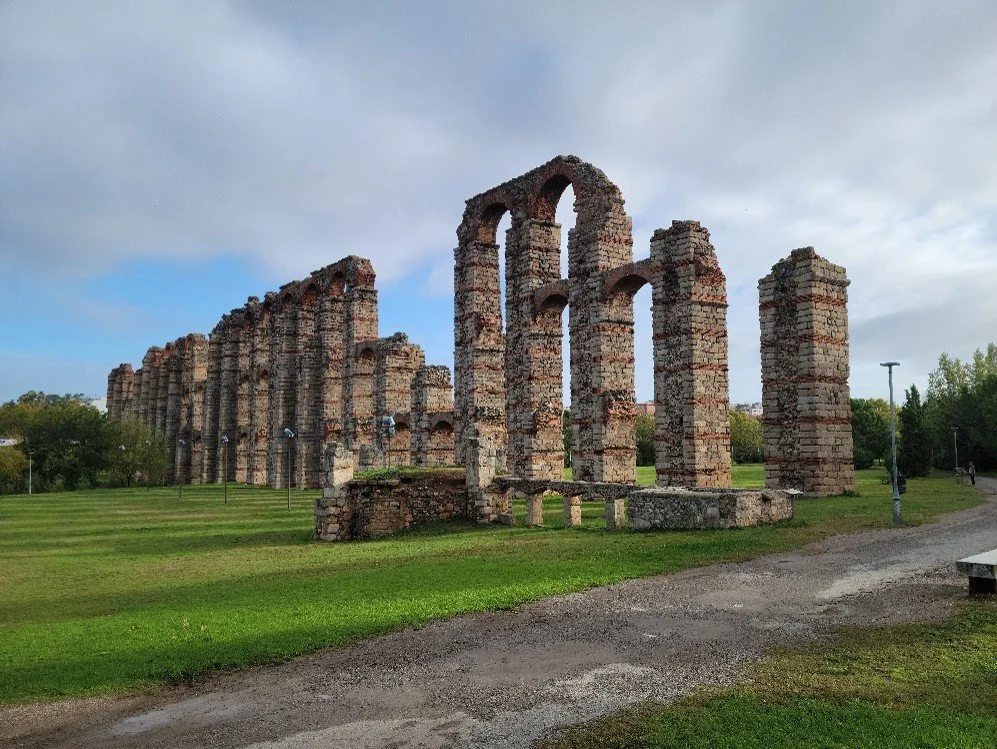
Mérida
North of Seville, Mérida (the Roman Emerita Augusta) was founded in 25 BC as a retirement town for Augustus’s veterans. It came complete with a theatre, an amphitheatre, the Temple of Diana, a bridge over the Guadiana you can still walk across today, and a reservoir and aqueduct to keep the water flowing. Not a bad pension plan. Beyond it, Extremadura’s tough little hill towns produced the conquistadors, Cortés from Medellín and Pizarro from Trujillo, who headed south to Seville and the ships to the New World.
Beyond Extremadura the road climbs onto the meseta of Castilla y León and reaches Salamanca, a city that has seen it all. Built of golden sandstone that glows at sunset, it has been a university town since 1218, home to Spain’s oldest university and one of the oldest in Europe. In 220 BC Hannibal besieged it, and legend has it the town’s women smuggled swords out under their clothes so their men could fight their way free. In 1812 Wellington beat the French at Arapiles, just south of the city. A French general grumbled that he had beaten 40,000 men in 40 minutes. In 1936 Franco set up his headquarters in Salamanca’s Bishop’s Palace and gave speeches from the balcony in the Plaza Mayor. That October, the philosopher Miguel de Unamuno, rector of the university, stood up in front of a hall full of Franco’s supporters and told them, "You will win, but you will not convince." He was placed under house arrest and died before the year was out. Four decades on, with Franco gone and democracy restored, history proved him right.
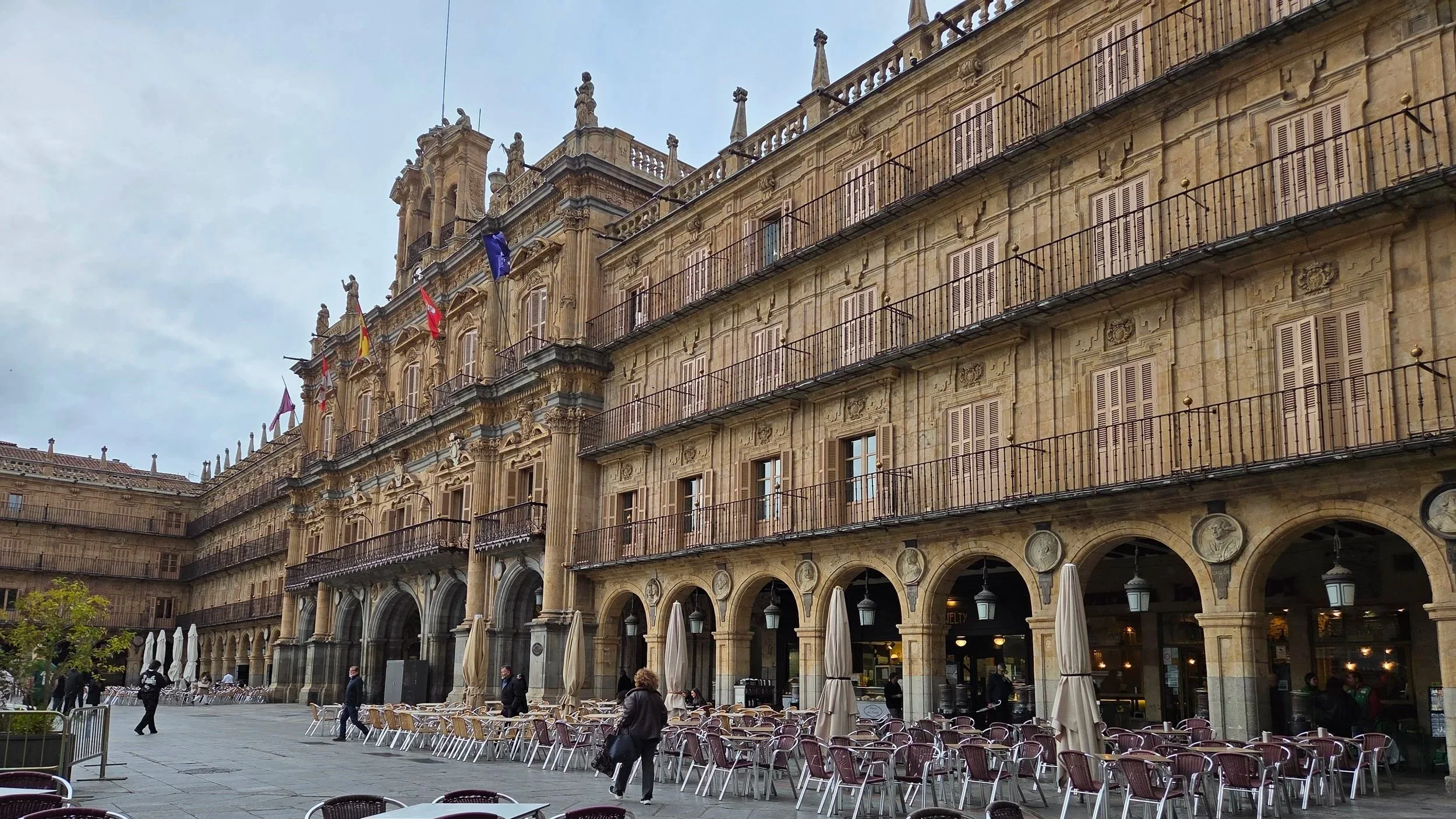
Plaza Mayor, Salamanca
North of Salamanca the road reaches Zamora, a quiet river town with one of the richest collections of Romanesque churches in Europe. In 1072 King Sancho II laid siege to it, trying to take the town from his own sister, Urraca. Legend says a knight named Vellido Dolfos slipped out of the gates, stabbed the king and raced back inside, with El Cid, Sancho’s champion, galloping after him. The siege dragged on long enough to give Spain a proverb: “Zamora wasn’t won in an hour,” the Spanish version of “Rome wasn’t built in a day.”
A little north of Zamora, at Granja de Moreruela, the Via comes to a fork in the road. The old Roman road carries on north to Astorga, where it meets the Camino Francés and the crowds. Most pilgrims bound for Santiago turn west instead, onto the Camino Sanabrés.
The Sanabrés climbs to Puebla de Sanabria, a hilltop town crowned by a castle, close to Lake Sanabria, Spain’s largest glacial lake. From there the road heads into the mountains and over into Galicia, where the dry oak country gives way to green hills, chestnut woods, stone villages and, almost certainly, rain.
Then comes Ourense, where the Romans found hot springs and never really left. Water still bubbles up at As Burgas in the middle of town, and there are thermal pools along the river where a pilgrim can soak tired feet. (We fully intend to.) A few more days and the road reaches Santiago de Compostela, about 1,000 km from where it began in Seville.
Today the traffic is mostly black pigs, storks and the occasional pilgrim. Which, as it turns out, is exactly the appeal.
Next in The Silver Way: Choosing the Long Road. Why three friends who had already walked the French Way decided to walk 1,000 km through a part of Spain none of them knew. Coming November 17.