How the Camino nearly vanished, and the unlikely patron who brought it back
Part 3 of 3 in the Origins Series.
By the twelfth century, the road to Santiago was one of the great journeys of the Christian world: busy enough to need a guidebook, profitable enough to fight over. Kings had built it, the Church had gilded it, and centuries of pilgrims had worn it smooth across northern Spain.
Then, slowly, almost everyone stopped coming. This is the story of how the Camino nearly disappeared, and the unlikely, uncomfortable patron who brought it back.
The Long Fade
No pilgrimage keeps growing forever. The Reformation cut off much of northern Europe's Catholic pilgrim traffic in the sixteenth century. War, plague, and the general instability of the following centuries thinned the route further. By the mid twentieth century, after two European wars and Spain's own brutal Civil War, long stretches of the Camino Francés had simply grown over — reclaimed by forest and disuse in the empty country of Castile and León. Santiago de Compostela, once one of the most visited cities in Christendom, had settled into being a quiet regional capital that most of the world had stopped thinking about.
Franco's Camino
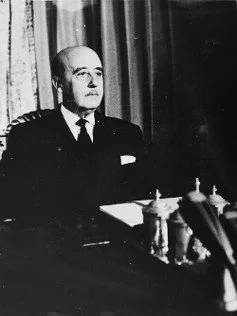
Franco
The revival, when it came, arrived from an unlikely and uncomfortable direction. Francisco Franco, ruling Spain as dictator from 1939 to 1975, saw in Santiago exactly what Alfonso II had seen eleven centuries earlier: a Catholic, nationalist symbol worth investing in. Franco's government reinstated the historic Voto de Santiago, publicly exalted the saint as a symbol of Spain's traditional and “crusading” character, and folded the Camino into the machinery of state. In 1962 the route was declared a national monument; the following year it was absorbed into the national tourism authority. The regime restored landmark buildings along the way — including the Hostal de los Reyes Católicos in Santiago and the Monasterio de San Marcos in León — as government-run hotels (the Paradores), and marked the route with highway signage aimed at motorized pilgrims and history tourists as much as walkers. During the 1954 Holy Year, Franco himself publicly praised the pilgrimage as living proof of that same crusading spirit, and visitor numbers ticked modestly upward as a result.
It is a complicated inheritance. The same instinct that once turned a hermit's discovery into a kingdom's rallying cry was, a thousand years later, turning a fading regional pilgrimage into a tool of a dictatorship's cultural politics. But whatever the motive, the practical effect was real: after centuries of quiet decline, the Camino had a government-funded pulse again — buildings restored, a route re-marked, a name back in circulation. It was not yet the Camino pilgrims recognize today. That took two more decades, and a very different kind of champion.
The Modern Revival
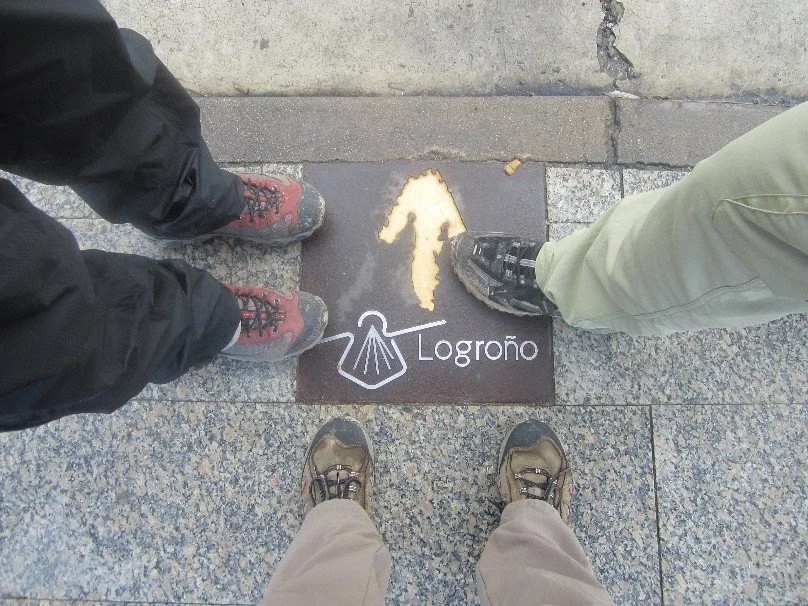
The Camino most of today's pilgrims actually walk — waymarked, hosteled, and internationally known — is largely the work of the 1980s and the momentum that built toward the 1993 Holy Year. A parish priest named Elías Valiña Sampedro, who had spent years researching and defending the route, began painting yellow arrows along the Camino Francés in the early 1980s — a simple, stubborn act of marking the way that still guides every pilgrim walking the route today. Spain's post-Franco democratic government, and later the Council of Europe and UNESCO, took up the route as a symbol not of any one nation's politics but of a shared European heritage, naming it Europe's first Cultural Route in 1987 and inscribing it as a UNESCO World Heritage site in 1993.
That Holy Year is generally treated as the turning point. Pilgrim numbers, which had been a few hundred a year for most of the twentieth century, began climbing toward the hundreds of thousands the Camino sees today. Valiña's yellow paint and the scallop shell that had marked the road for centuries are, between them, still the only two things you actually need to find your way to Santiago.
What's Left
Twelve hundred years, one contested miracle, a Reformation, two world wars, a dictatorship, and a parish priest with a paintbrush — that's the honest chain of events that put a scallop shell on your backpack and a yellow arrow on the wall in front of you.
None of it is as clean as the hermit and the field of stars. All of it is true. And somehow the walk still does exactly what it always did.
This is Part 3 of our series on the origins of the Camino. Start at the beginning with The Origin of the Camino: A Man, a Miracle and a Legend.