Some things you have to walk to understand
By Mike Luers — pilgrim, fifteen years
Nobody told us what we were walking into. And if they had, we probably wouldn't have believed them.
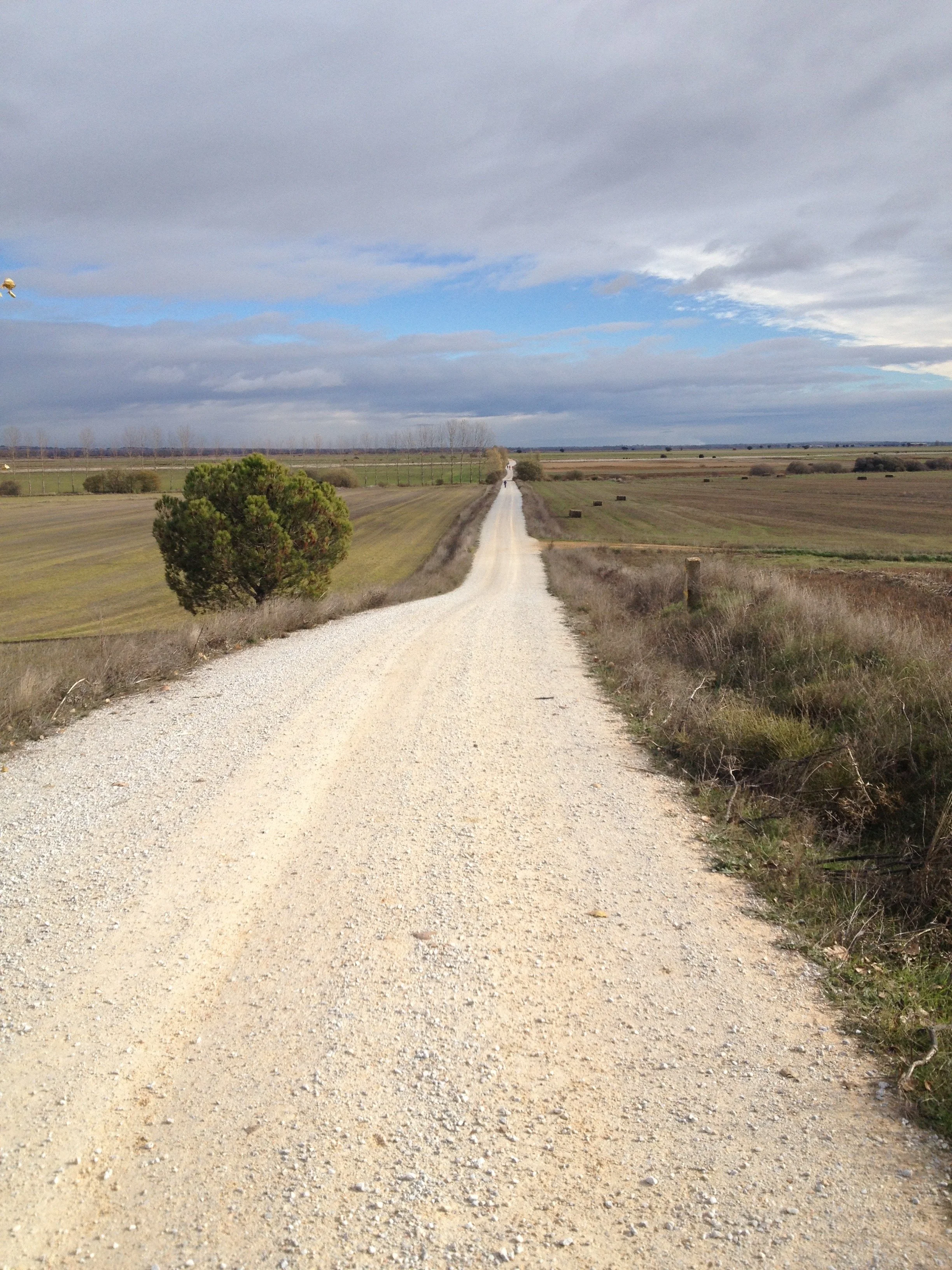
We came to the Camino de Santiago as three friends on a birthday trip. Three Canadians, November 2011, a train to the French side of the Pyrenees and a plan to walk over the mountains into Spain. It was Mike's fiftieth. The idea was a challenge, an adventure, a good story. We were there for the walk, the wine, the laugh at the end of each day.
The Camino, it turned out, was there for something else.
Here is what people think the Camino is before they walk it: a long hike. An athletic undertaking. Perhaps something vaguely spiritual, in a way that doesn't quite apply to them personally. A bucket list item with medieval churches along the route.
All of that is true and none of it is the point.
The Camino is what the walking does to you. And you cannot understand that distinction until you are four or five days in, somewhere in Navarre, Rioja, or on the meseta west of Burgos, and you notice that the noise has stopped.
"You get up. You walk. You do it again. And somewhere in that rhythm, the person you have been performing for twenty years gets very tired and sits down by the side of the road."
The inbox. The decisions you've been avoiding. The version of yourself you present to the office, the board, the family — the one that requires constant maintenance and a reliable wifi connection. All of it runs out of fuel. Your body is working. Your legs are moving. The path is clear and finite and entirely yours. The mind, eventually, goes quiet.
What arrives in that quiet is different for everyone. For some it's clarity about a decision that has been waiting. For others it's grief, finally given room. For others still it's simply a quality of presence that they haven't experienced since childhood. Whatever it is, it cannot be forced. You just walk, and you make room for it, and it comes.
The French Pilgrim
On our fifth trip, we walked the last leg of the Camino Frances — Sarria to Santiago, then on to Finisterre and the Atlantic. A couple of days out of Sarria, we met a French woman, in her early forties, who had started her Camino at Le Puy-en-Velay in France, sixty days and nearly two thousand kilometres behind us.
We walked with and near her for a few days but didn't share much conversation. We kept different paces. We arrived in Santiago a day ahead of her and spent the night at the Parador — the grand old hotel on the cathedral square, the one that has been receiving pilgrims for five hundred years.
The next morning, we came out into the plaza in the November sunshine. And there she was.
She was lying on her side on the stones of the square, facing the cathedral. Just looking at it. Sixty days of walking, and she had arrived, and this was what she wanted to do with the moment — lie down on the cobblestones and look at the thing she had been walking toward for two months.
We walked over. Wished her a Buen Camino. Congratulations. She smiled, thanked us, paused and said:
"I have been walking for 60 days. And I don't want to stop."
That is the whole thing, in one image. A woman on her side on the stones of Santiago, not wanting sixty days of walking to end. Because the walking itself had become the point — the silence of it, the rhythm of it, the version of herself she had found somewhere on the road between Le Puy and the cathedral square.
It is one of the very few remaining experiences that demands your full attention, removes your distractions, and then simply waits to see what you do with the silence. The journey is the point. The introspection finds you whether you are looking for it or not.
Some things you have to walk to understand. This is one of them.