Our Routes
The Camino de Santiago is not one road. It is a network of ancient routes across Europe and the Iberian Peninsula, each with its own character, its own landscape, and its own rewards. The map shows the main routes pilgrims have walked for centuries — from the classic Camino Francés across northern Spain, to the southern Via de la Plata, the coastal routes of Portugal, the English Way from the north and west from Santiago de Compostela to the end of the earth.
We walk every route personally before offering it to pilgrims. If we haven't walked it, it isn't on our list. This takes time — and it means our offering grows route by route, year by year, as each new road is walked, documented, and understood from the inside.
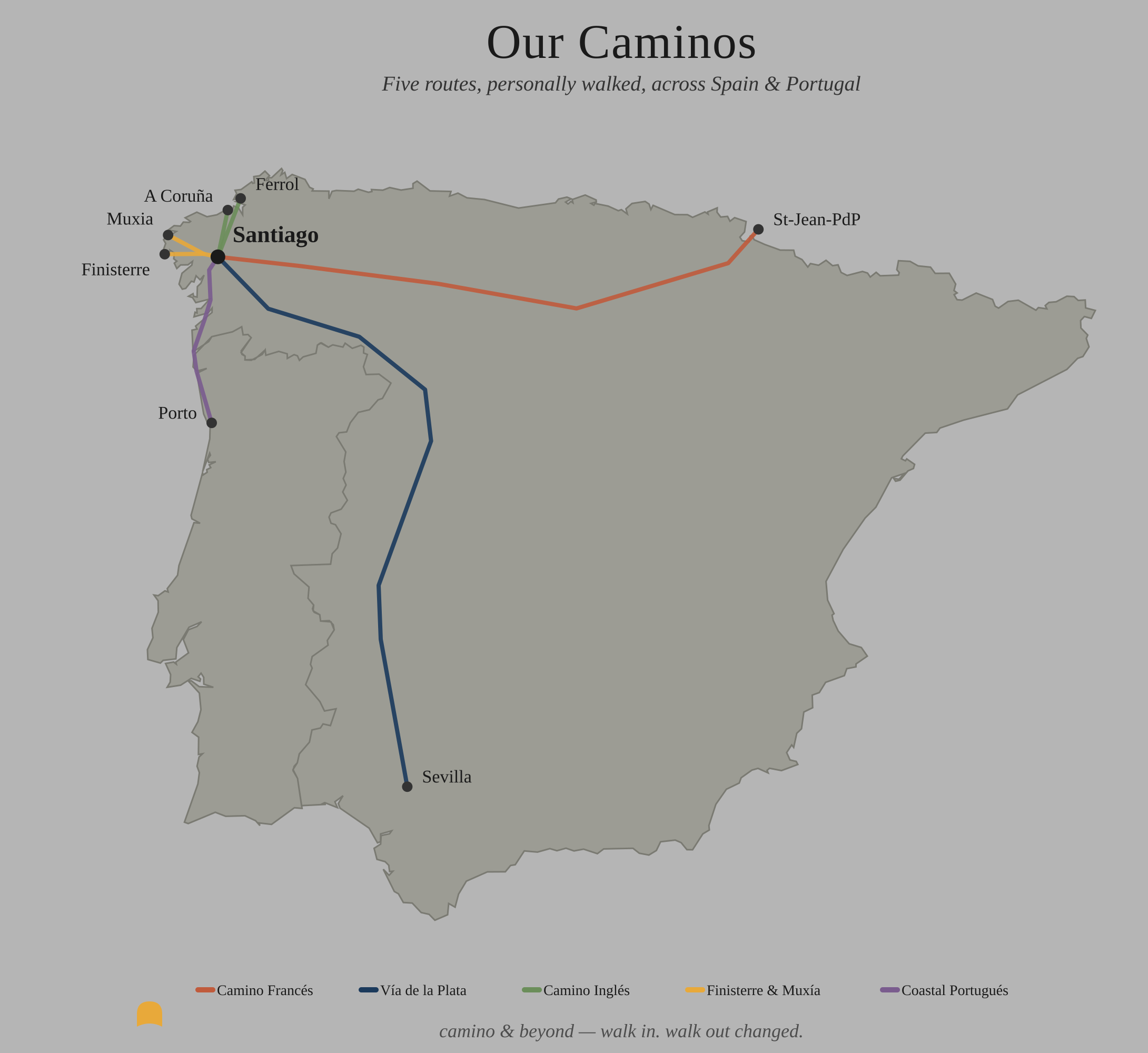
The routes below are the ones we currently offer. Explore each one and find the road that calls to you. More are coming.
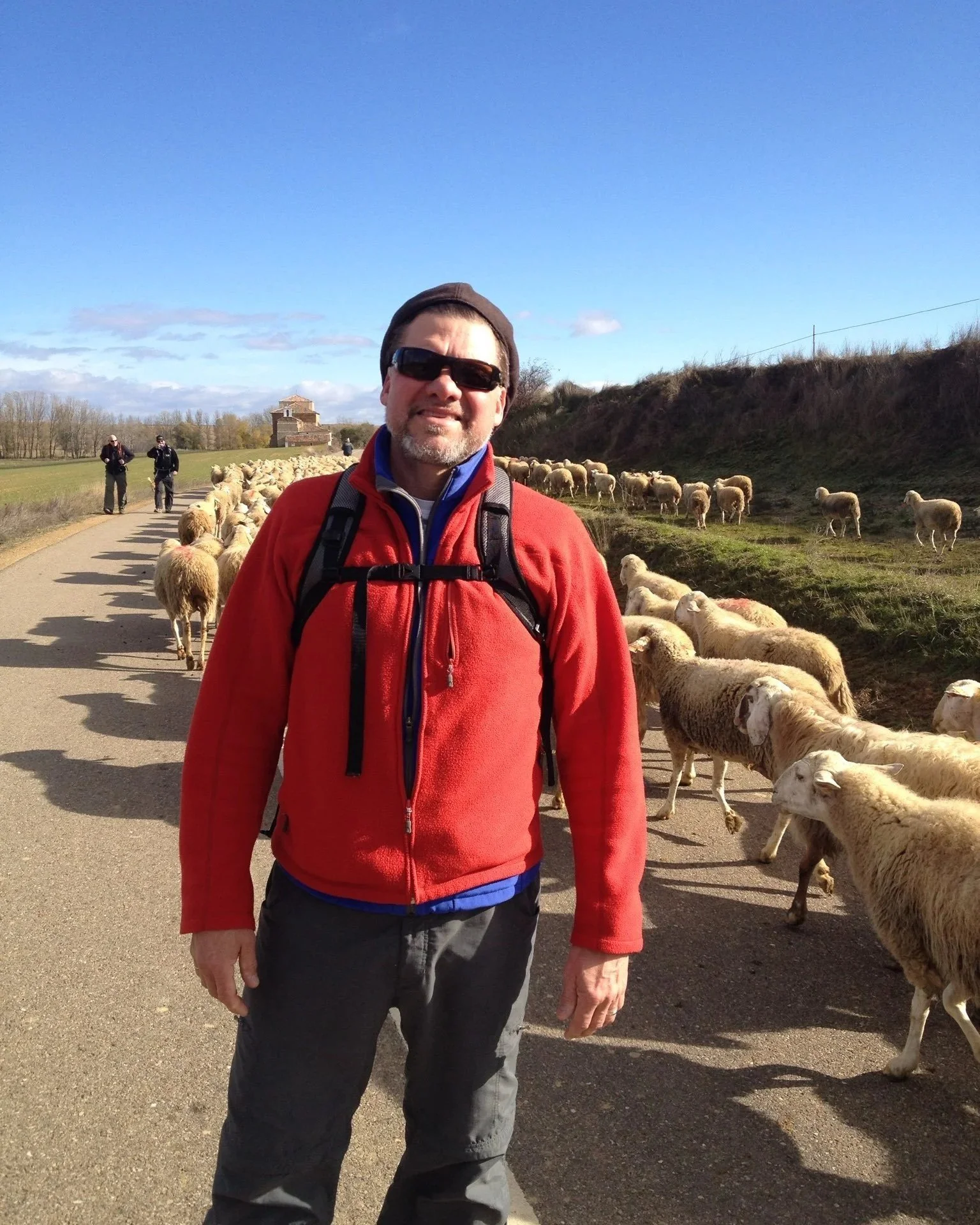
The French Way
Camino Francés — The French Way
Saint-Jean-Pied-de-Port to Santiago de Compostela — 800km
The classic pilgrimage route and the most walked Camino in the world. Beginning with a dramatic crossing of the Pyrenees, the Camino Francés crosses the wine country of La Rioja, the vast open plain of the meseta, and the mountains of Galicia before arriving at the Cathedral of Santiago de Compostela. Seven distinct sections, each with its own character and its own rewards. The road that has been changing people for a thousand years.
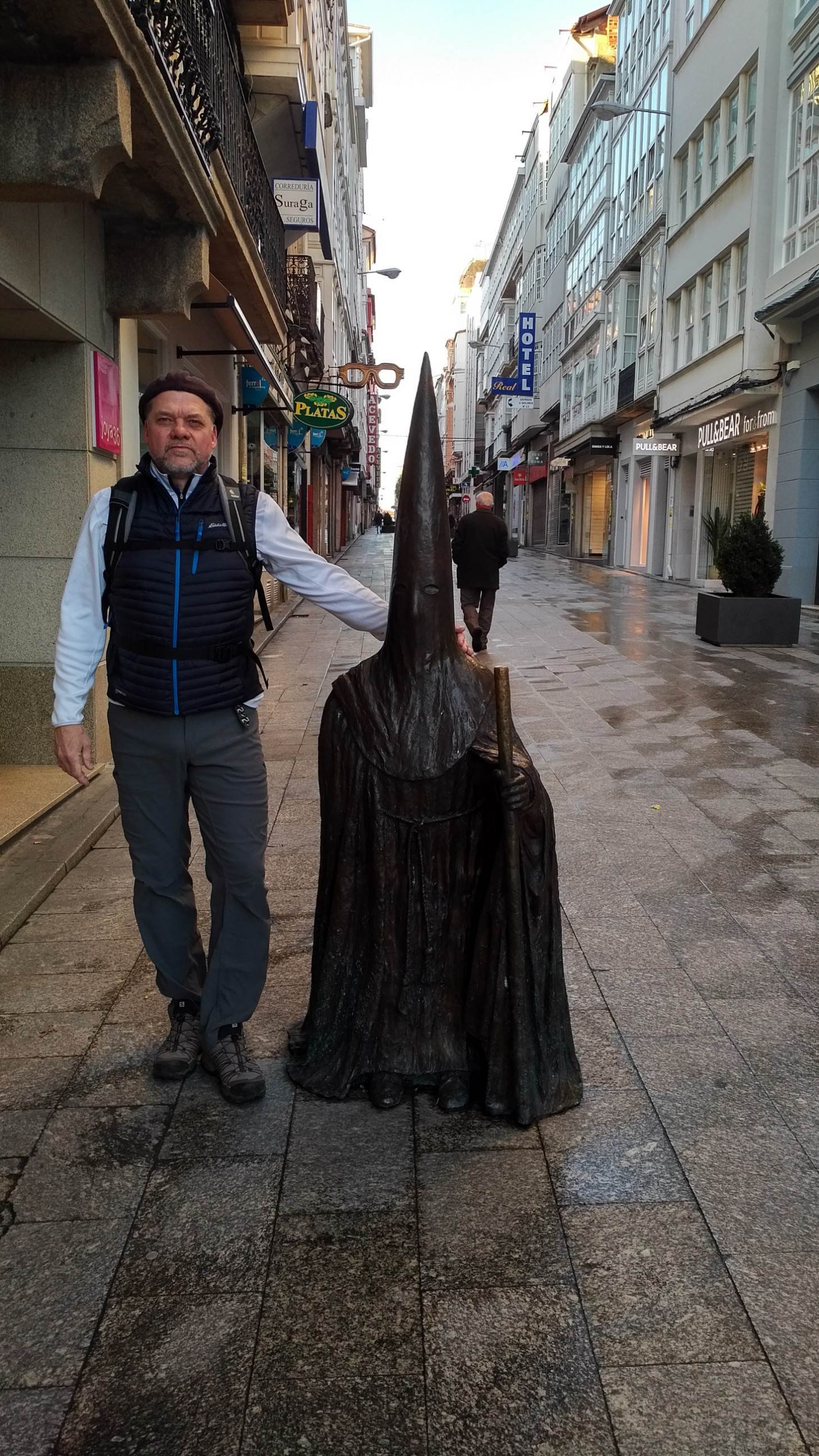
The English Way
Camino Inglés — The English Way
Ferrol or A Coruña to Santiago de Compostela — 75km or 120km
The shortest of the main Camino routes and one of the most historically interesting. The Camino Inglés follows the route walked by medieval pilgrims who arrived by sea from Britain and northern Europe — landing at the Galician ports of Ferrol or A Coruña and walking south through the green hills to Santiago. A week or less on the trail, fully qualifying for the Compostela, and an ideal introduction to the Camino for those with limited time
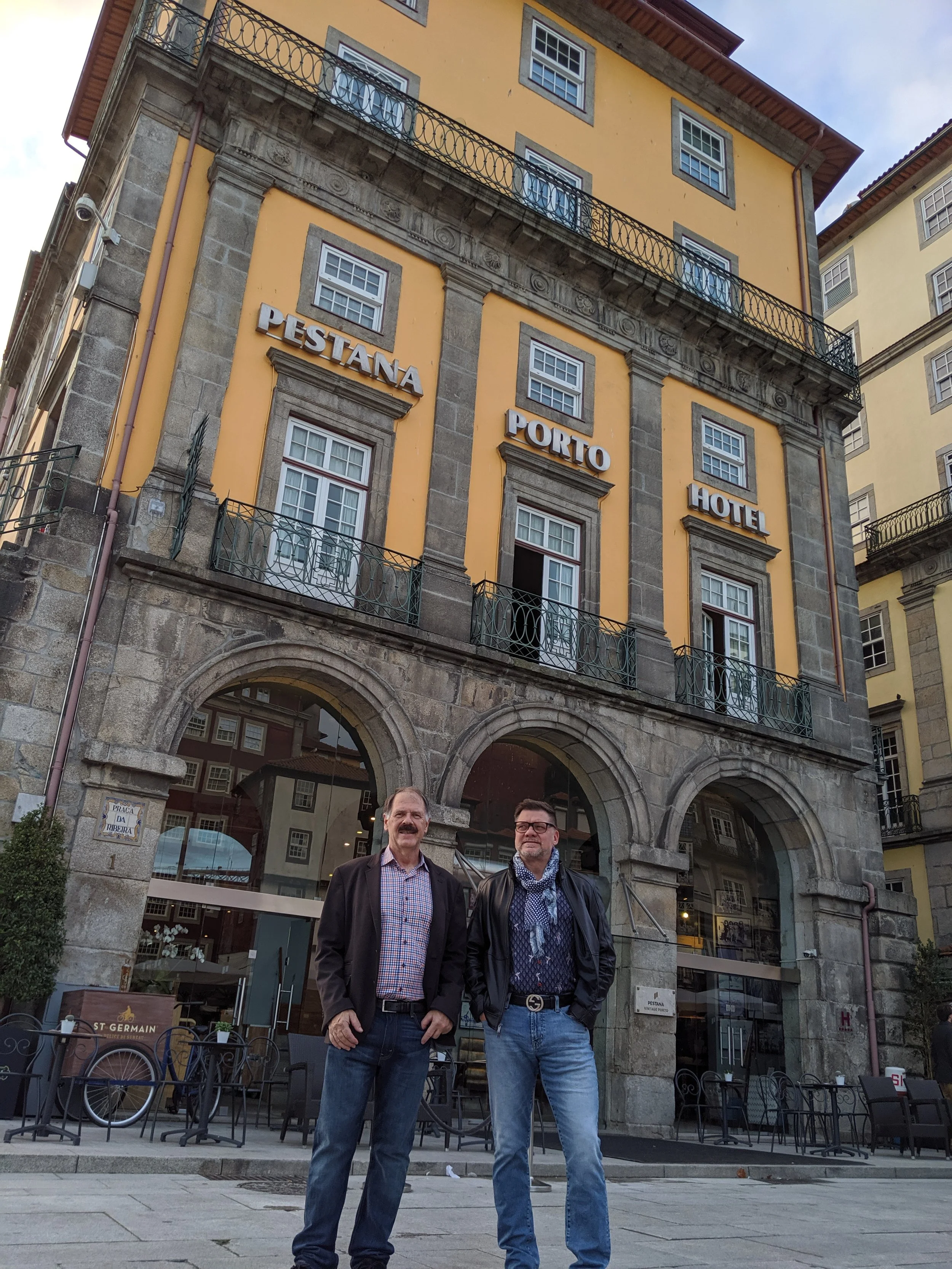
The Coastal Way
Camino Portugués Coastal — The Coastal Route
Porto to Santiago de Compostela — ~280km
The Coastal Camino follows the Atlantic shoreline north from Porto through the fishing villages and windswept beaches of northern Portugal before crossing into Galicia and arriving in Santiago. Less crowded than the Francés, more consistently beautiful, and one of the most visually distinctive walks in Europe. Accessible, manageable, and deeply rewarding for first-timers and returning pilgrims alike.
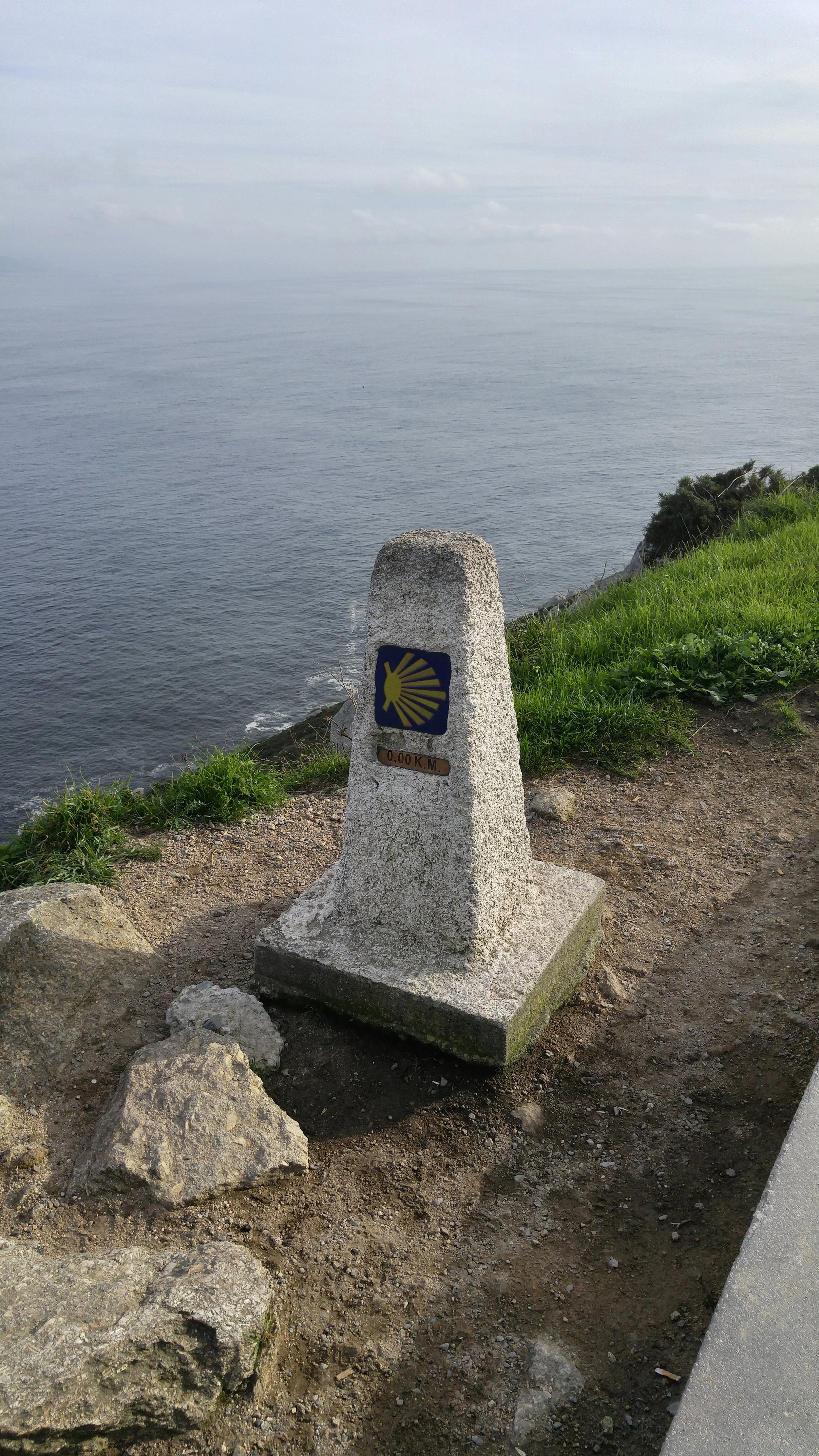
The Way to the End of the World
Camino Finisterre — The Way to the End of the World
Santiago de Compostela to Finisterre and Muxia — ~120km
Medieval pilgrims who reached Santiago often continued west to Cape Finisterre — finis terrae, the end of the earth — where the land runs out and the Atlantic begins. The walk from Santiago crosses the green hills of Galicia to the lighthouse at Cape Finisterre and the kilometre marker reading 0.00. From Finisterre the route continues 29km along the Costa da Morte — the Coast of Death, named for the hundreds of ships wrecked on its rocky Atlantic shoreline — to the fishing village of Muxía, the quieter and by many accounts more powerful ending.
The Camino Finisterre is offered as an extension to all of the Caminos. Ask about adding it when you request your quote.
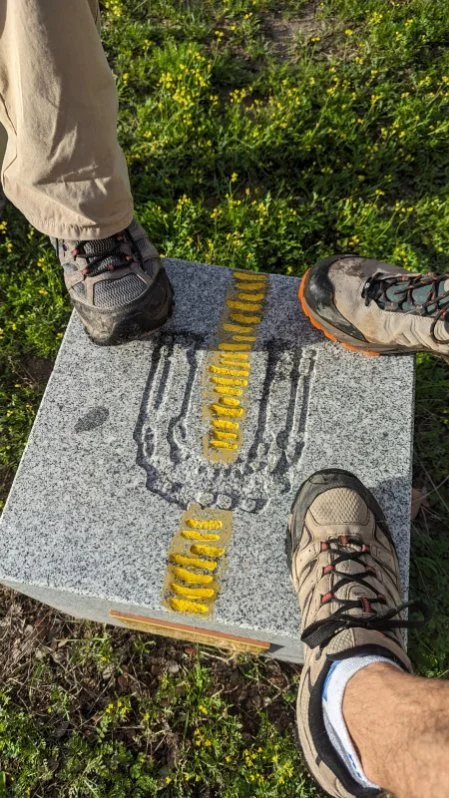
The Silver Way
Via de la Plata — The Silver Route
Seville to Santiago de Compostela — ~1000km
The great southern route and the longest of all the Camino paths. The Via de la Plata follows an ancient Roman road north from Seville through the vast, empty landscapes of Extremadura and Castille — cork oak forests, rolling farmland, medieval towns, Roman ruins and long stretches of trail where you may walk for hours without seeing another pilgrim. Demanding, solitary, and extraordinary. For those who want the Camino before the Camino became popular.